Take no Shit : give no quarter

Shael Ben-Ephraim’s @XComms Premium (long-winded tending Vanity-project) article √ \☟

Observers have been saying for years that what is happening in the West Bank is ethnic cleansing. But now voices from the heart of the Israeli consensus are admitting it as well. Ron Ben-Yishai, the veteran military correspondent with the deepest ties to the IDF of any reporter wrote the following in a column for Ynet this morning:

1) He toured the West Bank and saw a repeated pattern. Settlers establish an outpost a few hundred meters from a Palestinian village, often funded by local councils with taxpayer money. Caravans, water tanks, generators, and livestock pens appear almost overnight. The IDF issues demolition orders but delays enforcement, while small army details end up effectively guarding the outposts.

2) Youth from these outposts conduct 24/7 “provocation patrols,” entering villages on foot or in ATVs provided by the Israeli government. Israeli flags get planted meters from Palestinian tents; barbed-wire fences annex thousands of dunams of grazing land.

3) He saw hundreds of productive olive trees cut down on private Palestinian land, far more than any military order authorized, apparently by a contractor paid from the defense budget.

4) IDF units include soldiers who ideologically sympathize with the settlers and stand by, or even help.

5) He calls this pattern organized, sophisticated, government-funded activity with a long-term strategic goal: clearing most of the West Bank of Palestinian presence and annexing it. He explicitly frames it as ethnic cleansing.

6) Ben-Yishai writes that if this group succeeds, his grandchildren and great-grandchildren will live in a binational Middle Eastern state where Jews are a minority.

The piece is shockingly blunt for a middle of the road military correspondent. This is not Haaretz or +972. This is Ynet and Ron Ben-Yishai. I was really stunned to see this. Hopefully some normie Israelis are waking up to the horror of what Israel is doing.

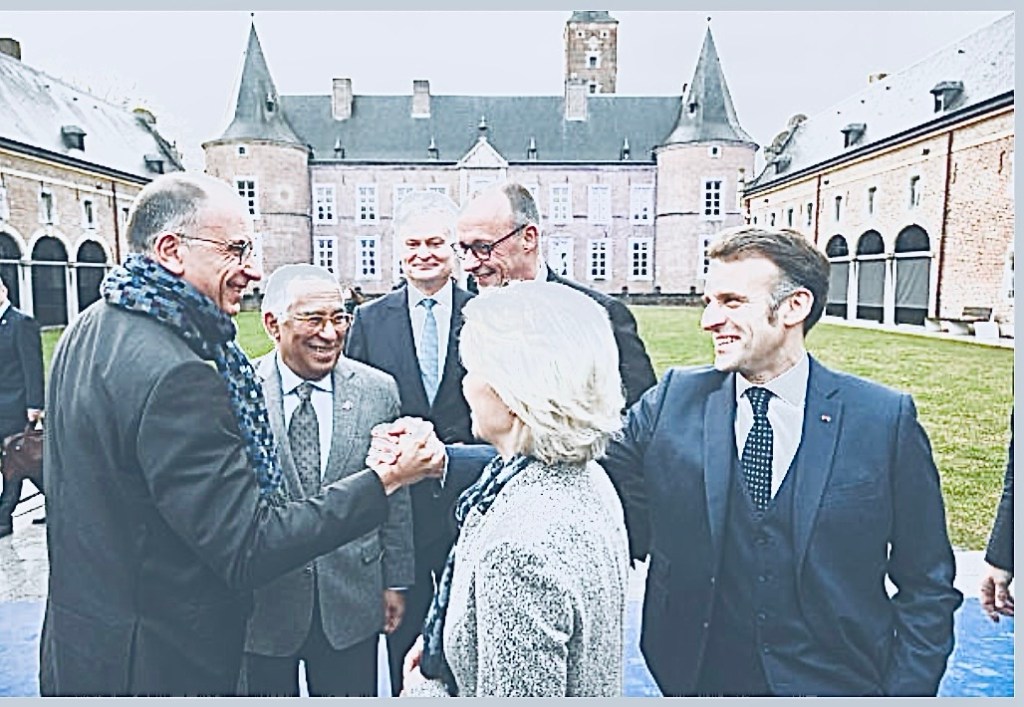
That University President guy & Emmanuel Macro n

TEAM ‼️

DUST IN THE LIGHT

Deuteronomy 4:9-12 ~ Remember what you have and haven’t seen

“9 Only be careful and watch yourselves closely so that you do not forget the things your eyes have seen or let them slip from your heart as long as you live. Teach them to your children and to their children after them.

10 Remember the day you stood before the Lord your God at Horeb, when He said to me, “Assemble the people before me to hear my words so that they may learn to revere me as long as they live in the land and may teach them to their children.” 11 You came near and stood at the foot of the mountain while it blazed with fire to the very heavens, with black clouds and deep darkness. 12 Then the Lord spoke to you out of the fire. You heard the sound of words but saw no form; there was only a voice. 

— Deuteronomy 4:9-12

            “Most of what I really need to know about how to live and what to do and how to be I learned in kindergarten,” wrote Robert Fulghum. “Wisdom was not at the top of the graduate school mountain, but there in the sand pile at Sunday School.  These are the things I learned: Share everything. Play fair.  Don’t hit people.  Put things back where you found them.  Clean up your own mess.  Don’t take things that aren’t yours.  Say you’re sorry when you hurt somebody.  Wash your hands before you eat.  Flush. Warm cookies and cold milk are good for you.  Live a balanced life – Learn some and think some and draw and paint and sing and dance and play and work every day some. Take a nap every afternoon.  When you go out into the world, watch out for traffic, hold hands and stick together.  Be aware of wonder.”

            Now my guess is that whether you are very little or whether you are older, you just remembered something that you needed to remember.  You remembered what you already knew.

            Moses would agree that, “wisdom was not at the top of the graduate school mountain, but there in the sand pile at Sunday school.”  He would tell you that most often you need to remember what you already know.

            In many ways the life of faith is one big act of remembering.  You live each day mindful of who God is, of what He has done and what He can do, of His call upon your life, and of His promises for the future.

            You need to remember and remembering is difficult.  It should be obvious that remembering is difficult because you remembered something precious that you had momentarily forgotten when that list of what I learned in kindergarten was read. You need to work to remember and to keep remembering because it is so easy to forget.

            Remembering requires effort and the effort required is increasing because we live in a distracted society.  The various entertainments and mass media we enjoy were simply unimaginable to previous ages as is the time which we give to them.  We are very distracted and distracted people do not remember. We are too distracted to bring what is important to mind.

            Neil Postman is right about our age, “When a population becomes distracted by trivia, when cultural life is redefined as a perpetual round of entertainments, when serious public conversation becomes a form of baby-talk, when, in short, a people become an audience, and their public business a vaudeville act, then a nation finds itself at risk; culture-death is a clear possibility.”

            Moses would say that we are distracting ourselves to death. We are forgetting ourselves to death. We need to remember.  The church is called to remember.  If we don’t remember who God is, what He has done and can do, His call upon our lives, and His promises for the future, if we are not living mindful of this, then what Postman said is true about the culture is true about us as a church, “culture-death is a clear possibility.”  We already know.  We must remember.  God’s people must remember and keep remembering.  That is the claim of this sermon: God’s people must remember and keep remembering.

            We will see this in two points.  First: remember what you have seen.  Second: remember what you did not see.  In verse 9, Moses gives the call to remember what has been seen.  In verses 10-12, Moses gives the call to remember what has not been seen. 

            First: remember what you have seen.  God’s people were preparing to enter the Promised Land.  The men and women who were listening to Moses were only children at the time of the Exodus.  Moses told them to remember all they had seen.  Moses warned them not to act like their parents.  Verse 9, “Only be careful and watch yourselves closely so that you do not forget the things your eyes have seen or let them slip from your heart as long as you live.”

            The parents of the men and women listening to Moses didn’t lose access to the memories of the plagues, of the parting of the Red Sea, of the fear and glory at Mount Sinai.  They didn’t lose access to those memories, but they did forget.  They forgot in the same way you can forget to implement what you learned in kindergarten.

            That generation’s parents were not mindful of the fact that God rescued them from slavery to the Egyptians.  In fact, they regularly grumbled about that fact.  They weren’t mindful then of the fact that their God was a warrior who was, frankly, unstoppable; you see that in the fact that they refused God’s marching orders into the Promised Land.  What Isaiah said to the generation of the exiles was true about the Exodus generation, “You have seen many things, but you pay no attention; your ears are open, but you do not listen.”  They would not remember.

            Moses told their children and the Spirit is telling you to act differently.  “Only be careful and watch yourselves closely so that you do not forget the things your eyes have seen or let them slip from your heart as long as you live.”

            The men and women listening to Moses had seen remarkable wonders and they needed to remember.  Even the food they ate was a daily miracle.  Let’s just take manna as an example so you can consider how you must remember.  How could that generation remember manna in the wilderness?  Moses told them; the Lord “humbled you and let you hunger and fed you with manna, which you did not know, nor did your fathers know, that He might make you know that man does not live by bread alone, but man lives by every word that comes from the mouth of the Lord.”  Now you can remember manna even though you never ate it by living mindfully of the fact that as a child of God you don’t live by the sweat of your own brow; you live by every promise that comes from the mouth of God.  You remember that when bills come.  You remember that when checks come.  That’s how you remember.

            You must remember what God has done and what He does. God never invites you to ponder abstract notions about Himself.  He tells you to remember what He has done in history.  When Israel was afraid that the Lord couldn’t save them, He didn’t say, ‘well, I’m omnipotent; I’m all powerful.’ He told them to remember what He had done.  He said, ‘Lift up your eyes on high and see [the stars]: who created these? He who brings out their host by number, calling them all by name; by the greatness of His might not one of this is missing.  [So] why do you say, O Jacob, and complain, O Israel, “My way is hidden from the Lord, and my cause is disregarded by my God”?  Have you not known?  Have you not heard?  The Lord is the everlasting God, the Creator of the ends of the earth.’ You could summarize all of that in one word: remember.

            Remembering has very little to do with accessing mental files about the past; it has much more to do with living wisely in the present in light of the past.

            Now you haven’t seen what that generation had seen.  You might be thinking, ‘if I saw total darkness cover the sky for three days as in the Exodus, I would remember.  I would live differently.  If I walked between walls of water like they did at the Red Sea, of course I would remember and live a life that was mindful of God.’  Don’t be so sure.  The Exodus generation saw but they didn’t live any differently.  They saw many things but paid no attention.

            You might want to see wonders and miracles, but what you need to do is listen.  Listen to Jesus’ words to Thomas who demanded to touch his wounds before he would believe in the resurrection.  He said, “Have you believed because you have seen me?  Blessed are those who have not seen and yet have believed.”

            You don’t need to see manna from heaven to believe that your daily bread comes from God.  You don’t need to see the risen Christ to believe that he rose.  You have the Scriptures.  You have heard.  The question is ‘are you remembering’?

            Remembering involves teaching.  “Teach them to your children and to their children after them,” as verse 9 puts it.  We studied this matter at length last month, but it bears repeating.  For children to remember, parents must teach them what is worth remembering.  You train your children to remember by keeping them mindful of God and His ways. Read the Bible with your children at the end of meals.  Read the Catechism with your children at the end of meals.  If you don’t prioritize these matters, remembering will not become a priority for your children.

            You need to keep the glory of God, His grace, and His ways in front of your children.  They don’t have the stories down the way that you hope they do because none of us do.  There is a big difference between knowing data about, say, Elijah and Elisha and remembering how to live in the midst of a culture that has lost its way as they did.  You can know the stories and still not remember. 

            Jesus remembered.  He knew the same Scripture as the Pharisees, but he remembered.  He didn’t hate or revile his persecutors because he remembered, “It is mine to avenge; I will repay,” says the Lord.  He treated people gently because he remembered, “A bruised reed he will not break, and a smoldering wick he will not snuff out.”  Both he and the Pharisees knew those Scriptures but only he remembered.  Your remembrance of Scripture isn’t seen on a test; it is seen in your life.

            Moses told that generation to remember the wonders they had seen.  He also told them to remember what they had not seen. That is our second point: remember what you did not see.

            Moses now turned his attention to Horeb, which is another name for Sinai.  The Sinai experience is one of the mountaintops of the Bible, both literally and figuratively.  You simply cannot understand the history of the United States without considering the Constitution.  You simply cannot understand the history of God’s people without considering the Sinai.

            Sinai was a place of reverence.  You see that in these verses.  Moses said the mountain blazed with fire to the very heavens.  He said the sky at Sinai was full of black clouds and deep darkness.  Everything those Israelites saw told them that this moment was not to be taken lightly.

            That was part of the purpose.  Verse 10, ‘Remember the day you stood before the Lord your God at Horeb, when He said to me, “Assemble the people before me to hear my words so that they may learn to revere me as long as they live in the land and may teach them to their children.”’

            The people saw Sinai blazing with fire to the very heavens, in part, so they might learn to revere God.  The people saw the meteorological terror of black clouds and deep darkness in daytime so that they might be sensible about what it means to hear from the Lord.  The lesson is clear: don’t be flippant with God.  If you have no reverence for God, the Bible says that you can define yourself as a fool; the fear of the Lord is the beginning of wisdom.

            The Sinai experience wasn’t an end in itself.  God wasn’t simply intimidating a nomadic people group.  He brought them to Sinai to listen.  Verse 12, “Then the Lord spoke to you out of the fire.”

            The shock and awe of Sinai was for the purpose of words. The words come out of the fire.  “Assemble the people before me to hear my words so that they may learn to revere me.”

            You cannot hear God’s word rightly without revering the God who speaks.  That was true at Sinai.  That was true when you opened your Bibles a few minutes ago.  If you read those words without reverence, you read them wrongly despite your grammatical comprehension.

            You cannot hear God’s word rightly without revering the God who speaks, and—to flip it around—you hear God’s word in order to revere the God who speaks.  “Assemble the people before me to hear my words so that they may learn to revere me.”

            God spoke on Sinai to train Israel and us in reverence and He spoke at Sinai so that we might revere Him.  God gave commandments so that we might learn to revere Him.  Just as the fire and clouds at Sinai were not an end in themselves but rather a call for reverence, so the commandments of God are not an end in themselves but rather are a call for reverence.  The commandments of God teach you to revere God.

            God didn’t give us commands for the sake of keeping commands.  He gave us commands so that we might revere Him, which is the only sensible way to deal with God if you’ve ever encountered God.

            You don’t keep the commandments just to keep the commands.  If you do, you will fall into legalism and you will think that you are keeping the commands when in reality you are failing to revere God which is the point of the commands.  People who keep the commands just to keep the commandments are like a man who shifts his car into drive just to go forward rather than to go someplace.  The commands take you some place.  They take you reverence for God.  They take you to love for your neighbor.  Jesus didn’t keep the commands just to keep the commands.  He kept them to go someplace.

            Now all of this—the shock and awe visual of Sinai and the voice out of the fire at Sinai—underline what was not seen at Sinai.  What did Israel not see at Sinai?  Read verses 10 through 12 and put up your hand when you think you have the answer.  What did Israel not see at Sinai?

            They didn’t see God.  “You heard the sound of words but saw no form; there was only a voice.” That sentence in the Hebrew is choppy to underline the peculiarity of that moment and that moment is ever with us. God cannot be seen.  God must be heard. 

            Moses told this generation to remember that they did not see God at Sinai.  They saw fire and they saw black clouds but those were only the edges of the glory that cannot and must not be seen.  If the glory that could be seen at Sinai was fearsome, imagine the glory of the God who could not be seen and must not be seen.

            Any attempt to visualize God is an act of domestication. People try to picture the God who cannot be seen as an attempt to tame the God who cannot be tamed.  That is the lesson of Sinai: you can’t subdue God. God subdues you and that is for your good.

            The worship we are giving right now drives all of this home.  You cannot see God in this sanctuary and there are no images of God in this sanctuary. You cannot touch God in this sanctuary, but you do hear Him speak in His word.  We meet God as He speaks.

            Even the record of the incarnation drives this home. People ask all sorts of questions about the God-man, ‘what did he look like?’ ‘how tall was he?’ ‘what color were his eyes?’ and the gospel writers are silent.  They were silent about it not because they forgot; Matthew knew what Jesus looked like; he was silent because he was wise.  Questions about Jesus’ appearance are simply our attempts to categorize him but that is not why he came.  He came to make the Father known.  “No one has ever seen God, but the only-begotten Son, who is at the Father’s side, he has made him known.”  You don’t need any visual descriptions for that.

            It would do you no real good to be able to remember what Jesus looks like, but it does you great good to remember what Jesus has done.  It does you great good to remember the cross.  It does you great good to remember the resurrection.  It does you great good to daily remember what he has done and what he will do.  You remember that by putting it into action.

            In kindergarten you learned that, “Warm cookies and cold milk are good for you.”  You don’t remember that by recalling that truth.  You remember that by eating warm cookies and drinking cold milk.  You remember God not merely by remembering what His word contains but by reverting Him for what His word contains. That is the act of eating the milk and cookies.

            You must remember to revere the Lord.  You must remember the wonders and the words of the living God.  You must remember that God is not distance.  He comes delightfully and frightengly near.  He did it at Sinai.  He did it in the manger. 

            That is the elementary lesson that must not be forgotten – not some mroal platitudes that you can recall to be a good person, but the raw exposure of being subdued by God and loving it.  Remember.

            Don’t settle for recalling cute spiritual sayings. Remember the God who remembers you. He doesn’t just recall your existence. He lives mindfully of you and so you exist and so you are cleansed and so you are being changed.  He remembers you.  Remember Him who truly is unforgettable.  Amen.
 

Pahpa, where did the mad ppl get their ideas frome❓

Those two before his Government Therapy

It’s Fromm, chookie, or Friedman era effed Read Only Memory.

1. “We shall suffer damage from water and from fire We cannot change this state of affairs What we can do is adopt a resolute character as befits a good person in order to endure the changes of life with bravery and be in agreement with nature”
– Seneca (Letter 107) 

2. AI PRDCD JUNK LIT ⤵️

Key Themes and Meaning

  • Inevitability of Adversity: Seneca argues that disasters (floods, fire, losses) are guaranteed to happen and are part of the natural order of the world.
  • The Stoic Response: Instead of wasting energy complaining or fearing these events, one should focus on strengthening their character (virtue) to endure them bravely.
  • 3 AI gnrtd Junk-lit 📉
  • 3 AI gnrtd Junk-lit 📉
  • 3 AI gnrtd Junk-lit 📉
  • Nature’s Regulation Another translation of this sentiment from Seneca’s work suggests that “floods will rob us of one thing, fire of another” and that these reversals are “the means by which nature regulates this visible realm of hers” A similar concept is found in On Providence (5.10) where Seneca notes “Fire tries gold misfortune tries brave men” emphasizing that hardship is a test of character rather than just a misfortune

4. “Seneca, quite unmoved, asked for tablets on which 2 inscribe his will, and, on the centurion’s refusal, turned 2 his friends, protesting that as he was forbidden 2 requite them, he bequeathed 2 them the only, but still the noblest possession yet remaining 2 him, the pattern of his life [imago vitae suae], which, if they remembered, they would win a name for moral worth and steadfast friendship. At the same time he called them back from their tears to manly resolution, now with friendly talk, and now with the sterner language of rebuke. [‘Where,’ he asked again and again, ‘are your maxims of philosophy, or the preparation of so many years’ study against evils 2 come?] Who knew not Nero’s cruelty? After a mother’s and a brother’s murder, nothing remains but 2 add the destruction of a guardian and a tutor.’ ”

5. The Junk-lit on Schubert’s Frühlingstraum (from Winterreise) In this context it refers to a “Dream of Spring” or a dream of the past experienced within a cold winter landscape The lyrics explicitly describe dreaming of flowers and meadows while in a harsh cold reality

6. American-styled litter-chewer for the predilection amusement and blessedly the mental ‘meltdown’ or compleat lapse into gibberisch, Musklish & Gruntlish of the morally hamstrung subsidiaritarian raison d’etat (no, not the post Bismarck (1870 Europe) Machiavellian readout ‘national-interest’) but Edward Bernays, the “father of public relations,” dead on March 9, 1995, at age 103 at his home in Cambridge, Massachusetts, You-Essay/ I-am-you hell-on-earth Piagetian Arrested Development mental Eleven year-olds.

7. Grungy grinchy growly yet groovy Reported-speech a propos of every person in die welt never nothing → → Nachdenken über diese Winterträume

Nacht und Träume
German source: Matthäus Casimir von Collin

Heil’ge Nacht, du sinkest nieder;
Nieder wallen auch die Träume,
Wie dein Mondlicht durch die Räume,
Durch der Menschen stille Brust.
Die belauschen sie mit Lust;
Rufen, wenn der Tag erwacht:
Kehre wieder, heil’ge Nacht!
Holde Träume, kehret wieder!^

A presentation from magnanimously busted organic fruitgrower retailer exporter food mnfctrr and ex local, state and national government advisor/ enquiry secretary “Blundell !” bane of gangsters and their muppets Australia and abroad.

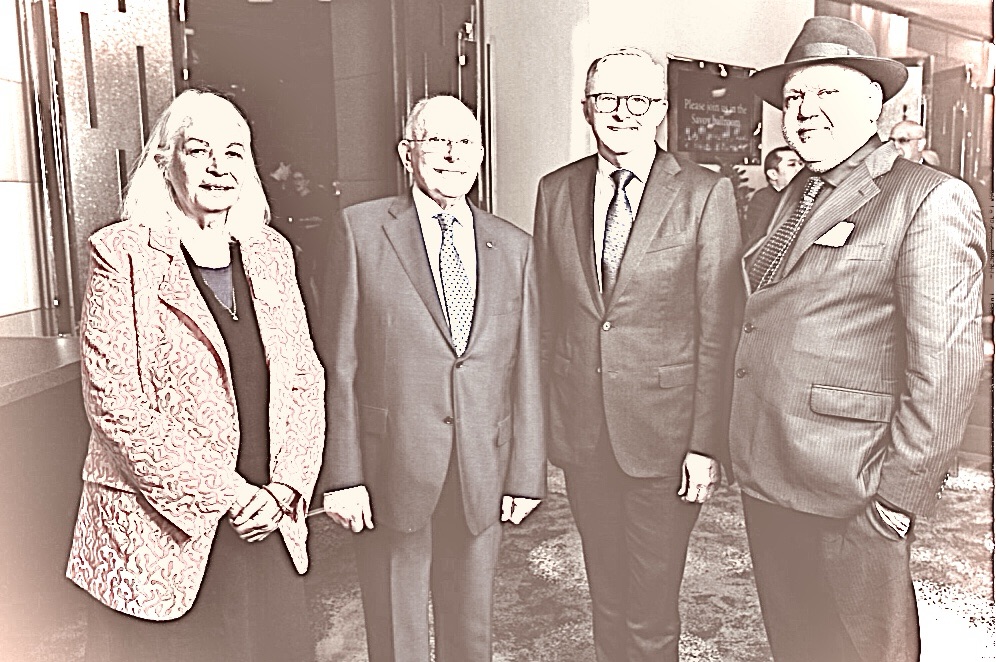
At this Sunday morning moment 32 years 10 months and 5 1/2 weeks out from electorally embarrassing the crooks and clowns of mainstream politics, his advice to Peter Yu of the Kimberley Land Council of 1996 if there’s a Man’s-dream (?) hop into it..

Australians, somewhen

0101010101010101010101010`101010101010101010101010101010101010101010101010

ⱽNight and Dreams
English translation © Richard Wigmore

Holy night, you sink down;
dreams, too, float down,
like your moonlight through space,
through the silent hearts of men.
They listen with delight,
crying out when day awakes:
come back, holy night!
Fair dreams, return!

Yr’ Not Well RU Lady❓

Dear John, your actions are delivering incredible wins for our oceans, wildlife and communities – thank you! By standing with Greenpeace, you amplify our collective voice, turning concern for the planet into tangible impact.

This month, we’re celebrating one historic achievement in particular: Australia formally ratifying the Global Ocean Treaty! This is a victory more than two decades in the making, and it ensures our oceans have stronger protections than ever before.

Impact news ratification

Australia ratifies the Global Ocean Treaty

Every action you took, voice you raised, and donation you made helped pressure the Australian government to ratify the Global Ocean Treaty. Although the treaty is already in force, the ratification is a crucial step for ocean protection. For the first time in history, Australia can now propose global ocean sanctuaries in international waters, including critical areas like the Tasman Sea.

Without your support, this simply wouldn’t have been possible. Thanks to you, sharks, whales, and countless endangered species could now have the safeguards and refuge they need to thrive.

In addition to proposing global ocean sanctuaries, this year, we have a once-in-a-lifetime opportunity to push for expanding and strengthening protections of our domestic marine parks. Stay tuned.Explore this win

2025 newsletter banner (MAY) (600 x 180 px)

You backed bold action against Big Gas

With your support, we were able to take a stand against the gas industry with a high-impact action at a major gas conference in Sydney last week. Two activists locked to a bannister dropped a banner over the grand stairwell reading “Gas Execs Profit. We Pay The Price”. While outside the conference, a larger group joined the protest, holding up banners with a bold message: “Tax Gas Profits”.

You make people-powered action like this possible, challenging gas corporations and lobbyists who have spent years dodging fair taxes and blocking renewable energy. Without you, we cannot confront corporations, capture public attention, and demand change. Keep supercharging this fight to stop Big Gas by signing the petition below.
Add your voice

🎥Watch the actionarrests, and the activists disrupting the gas conference.

impact news pacific

You’re defending the deep sea from destruction

Supporters like you helped make a groundbreaking report by Greenpeace Canada possible,revealing serious legal concerns about The Metals Company (TMC), a Vancouver-based corporation. The report shows how TMC is trying to bypass international law to securelicenses for deep sea mining.

It also highlights TMC’s plans to extract critical minerals from the Pacific Ocean’s Clarion-Clipperton Zone (CCZ), a region beyond any country’s national jurisdiction. Together, we can continue uncovering the threat TMC poses and pressurise governments to hold it accountable.Uncover the threat

Anchor butter Impact news

Exposing the world’s largest dairy exporter

Greenpeace Aotearoa sued New Zealand dairy giant Fonterra Brands for misleading customers with false claims on its butter packaging. And they won! 

Fonterra’s Anchor butter packaging claimed to be “100% New Zealand Grass-Fed”, but Greenpeace investigations revealed that the diet of the cows included palm kernel expeller – a dry feed that’s a product of the oil palm industry linked to rainforest destruction in Southeast Asia.

The lawsuit was settled outside court with Fonterra publicly admitting its Anchor butter claims were false. This landmark win shows that together we are driving change, forcing major companies to own up to their deceptive claims and impact on the environment. Read Fonterra’s admission

Thank you for supporting Greenpeace. Together, we’re creating a green and peaceful future and making this a landmark year for climate justice.

Sanchia Fernandes

Donor Development Specialist

Greenpeace Australia Pacific

Sanchia

P.S. Our CEO also pens a monthly newsletter, With Love, reflecting on the work we do at Greenpeace and the people who make our mission possible. If you haven’t already, be sure to subscribe so you don’t miss important updates.

Tear-Dark-Green-1
0
Facebook
Instagram
YouTube
TikTok

We acknowledge the nurturing of land and waters by Indigenous peoples since time immemorial. We acknowledge the enduring sovereignty of Indigenous peoples of Australia and the Pacific. We acknowledge we stand on the traditional lands of Indigenous peoples and pay respect to elders past and present.

We are committed to ensuring the privacy of your personal information. You can find out how we use the information you give us in our Privacy Policy.

Greenpeace Australia Pacific, 2c Hayes Road, Rosebery, New South Wales 2018, Australia, 1800815151

Unsubscribe Manage preferences

My anger at you will know no bounds

A Limousin bull

In 1972, 23 years old, I was identified by a northern country region of South Australia senior bureaucrat HJ Copley, earlier in his career the policeman at Fowlers Bay then DAA officer at 6 Morrison Ave Ceduna to expand the SA Gvrnmnt presence & purpose Chihduhn-angka tenfold.

غضبي عليك لن يعرف حدوداً

John Blundell 🦘🌎

08042026

AND now w great thanks to @WordPress Je-suis am a Rock-star

Corrupt cartels and monopolies dominate the global economy with impunity, in part by exploiting asymmetric information to lie, cheat, steal, and deceive. Asymmetric information is the disparity in knowledge that exists among buyers and sellers in a market. For example, a used car salesman might know that a given car on the lot could be a lemon, but the buyer has no clue. A financial advisor may recommend investments to to the client that inflate commission fees, but the client may think that the advice is being given on good faith. The asymmetry of information between buyers and sellers can affect everything from prices to product quality, and since it exposes some of the inherent weaknesses and imperfections in a market economy, it has often been used as a justification for government regulations to various degrees.

But the libertarian economists Tyler Cowen and Alex Tabarrok argued in a 2015 essay that asymmetric information is becoming less relevant because of technological innovation (“The End of Asymmetric Information”). They brought up several examples to support their argument, such as the declining frequency of odometer fraud in used car sales or reputation mechanisms on Yelp and Angie’s List that allow consumers to rate sellers and businesses. Their central point was that increased technological innovation and the democratizion of knowledge from the Internet have collectively reduced the importance of asymmetric information, and therefore we don’t need additional government laws and regulations to achieve the same goal. Buyers and sellers are now apparently capable of policing each other, so we should just get the government out of the way. That’s their thesis.

They are flatly wrong. Technological innovation has massively exacerbated asymmetric information, because it’s allowed the rich and powerful to protect and amplify their advantages over rivals and competitors by deploying new methods of evasion and subterfuge. Many new technologies are not even shared or publicized. They’re concentrated in the hands of powerful elites, who exploit them to ensure their ongoing class domination of society. There are thousands of critical patents that are kept secret by the United States government because they involve sensitive technology for national security. For another example, Volkswagen fooled government regulators by controlling its diesel engines with highly sophisticated software that could quietly cheat during emissions tests.

And for a final example, large brokerage firms on Wall Street operate advanced and secure dark pool market exhanges that can facilitate block trades through high-frequency algorithms for major institutional investors, all away from public view. For these elite investors, ensuring organized secrecy and informational asymmetry is exactly the point, as they don’t want to alert other investors and the public at large about the prices involved in their deals, prices that in some cases can differ sharply from those in public exchanges like the NYSE or NASDAQ. High-frequency trading also makes it far easier to commit spoofing, the practice of placing vast numbers of fake orders that are canceled before execution, all as a way of generating artificial demand for a particular stock or asset. In 2020, JP Morgan Chase paid a fine of almost $1 billion to the federal government for carrying out widespread order spoofing in precious metals futures contracts. Although JP Morgan happened to get caught in this one case, the vast majority of spoofing incidents are never publicized or prosecuted, precisely because high-frequency trading allows sophisticated investors to game the system and get away with it.

Furthermore, most of the examples given by Cowen and Tabarrok are focused on informational disparities at the point of market exchange. But so many of the major informational asymmetries in modern capitalism are actually found upstream in the production process. For example, a massive global auto parts cartel in the 2000s had substantial downstream effects on car prices, but consumers knew absolutely nothing about it. The cartel fixed and rigged bidding prices for over 200 different types of car parts sold to manufacturing companies like Toyota and Honda. A paper in 2019 cited estimates that the cartel’s activities affected international commerce worth anywhere from $3.2 trillion to $5 trillion, with injuries and overcharges sitting somewhere between $600 billion and $1 trillion. As of 2019, over $20 billion in penalties had been imposed on over 300 companies grouped into roughly 70 cartels worldwide. Likewise, the Lysine Cartel in the 1990s impacted prices for consumer food products around the world. Lysine is a critical amino acid that goes into animal feed. In the early 1990s, the American corporate giant ADM entered into a cartel agreement with other major food companies in East Asia and elsewhere. Under the agreement, the cartel tightly controlled global lysine prices and shipping volumes, effectively carving up the world market among the various cartel participants.

Simply put, even if Cowen and Tabarrok are correct that informational asymmetries are declining at the point of market exchange, that would prove nothing about asymmetries at different points along the economic chain, especially for industrial production, logistics, and distribution. The evidence clearly shows that these asymmetries still exist and have many complex downstream effects on prices for consumer goods and services. Asymmetric information is still here and still routinely plagues markets around the world. What we need now is a fight against monopoly power, not distractions from wayward libertarians who don’t know how the world works.

GEA & Monkeys’ thanks to the @Substack writer of say 5 April 2026 so let me do an awesome resource-profligate Artificial-intelligence Tell-search on the dude..

I’ll be ‘back’ in 5

Erald Kolasi

@technodynamics

Author of The Physics of Capitalism. PhD in Physics. Complex systems theorist exploring the nexus of economics, politics, energy networks, and ecological dynamics. Find out more about my work at www.eraldkolasi.com.

2K+ subscribers

Jonno

Australia

W/p has KO’d Me on ‘Billygoats’ Microsoft

This morning’s Oi-oi Land FTA 22

“The person who wishes to attain human perfection should study logic first, next mathematics, then physics, and, lastly, metaphysics.”
― Maimonides, The Guide for the Perplexed

tags: logicmathematicsmetaphysicsphilosophyphysicsself-improvementwisdom

Pierre Janet & the Breakdown of

Adaptation in Psychological Trauma

Bessel A. van der Kolk, M.D., & Onno van der Hart, Ph.D.

American Journal of Psychiatry, 146 (12), December 1989, 1530-1540.

Corresponding authors: Bessel van der Kolk, Psychiatry Department, Boston University Medical School,

and Trauma Center at HRI Hospital, Brookline, Massachusetts, USA. Email: bvanderk@aol.com

Onno van der Hart, Department of Clinical Psychology, Utrecht University, Heidelberg 1, 3584 CS

Utrecht, The Netherlands. Phone: +31(30)253-1785; fax +31(30)253-4718; Email: o

“It is not enough to be

aware of a memory that occurs automatically in response to particular current events: it is also necessary

that the personal perception &Eumil;knowsí this image and attaches it to other memories” (26, p. 135).

Dissociation

Janet believed that, under ordinary conditions, awareness of emotions, thoughts, actions, and sensations

related to any particular experience is united in a single consciousness and is under voluntary control.

Successful integration into the memory system depends on the cognitive assessment of new experiences.

Frightening or novel experiences may not fit into existing cognitive schemes; memories of these

experiences then can be split off trom conscious awareness and voluntary control, and fragments of

unintegrated events may later show up as pathological automatisms.

John Blundell

Australian fruitgrower & retailer smashed by Government L, S, F after 20/5/1992

The New Masters of Time Cough-up

²An [AP] (🇫🇷“inciting agent”) undercover.. [paid] by polc., gvrnmnt, or [crprtns].. entcs., encrgs., or tricks C1s or groups into committing.. trap targets into breaking the law [→/ ⇝] arrests, discrediting.. grp, or creating grnds 4 legal prosecution.

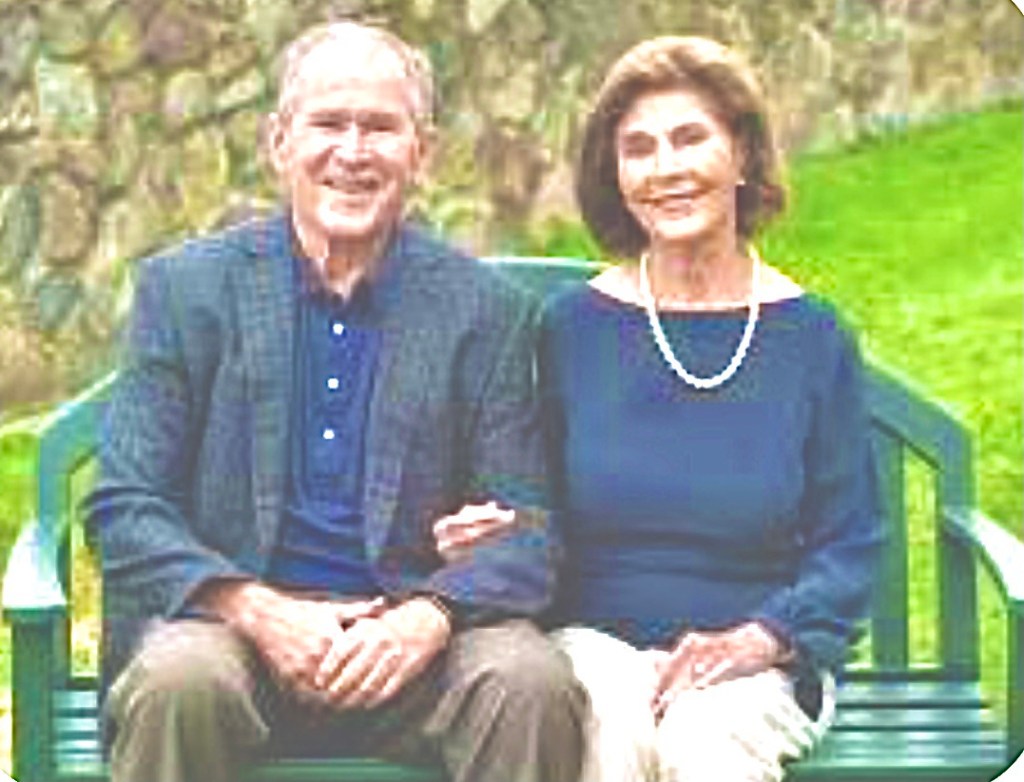
George Walker Bush and Laura Lane Welch Bush

“KEY SPCTS of the TWR of BBL

“Biblical Context: The story is in Genesis 11:1–9, occurring after the Flood, where Noah’s descendants settle in the land of Shinar (Babylonia).

“The Goal: Humans aimed to build a tower with its top in the heavens to “make a name” for themselves and prevent being scattered across the earth, which was against God’s command.

“The Interpretation: The tower represents human pride and presumption (hubris). It is seen as a “counterfeit Zion,” where humanity attempted to reach God on their own terms.

“The Result: God confused their language so they could not understand each other, leading to the abandonment of the project and the halting of the city’s construction.

“Meaning of “Babel”: The name is associated with the Hebrew word for “confuse” or “babble,” explaining the origin of diverse languages.

“Location: While not definitively proven, it is traditionally believed to have been located in Mesopotamia (modern-day Iraq), potentially inspired by ancient Babylonian ziggurats..

John Australia 31st March/ март/ mars/ πορεία 2026🥸🇦🇺🌏

GEA’s & Monkeys’ thanks to ‘Not cookie-cutter’: Nous boss explains $2m ANU job in Senate

By Nieve Walton

Updated November 12 2025 – 7:55pm, first published 4:35pm

Nous Group has explained the money and decision-making behind advice given to Australian National University, denying it uses a “cookie-cutter” approach.

Nous Group executives appeared before a Senate committee into university governance on November 12.

Chief executive Tim Orton said the consultancy group did $2 million worth of work for the Australian National University between 2024 and the start of 2025.

In previous years, the university had spent $190 million on different consultants, a decision which was criticised after job cuts were announced.

Mr Orton said Nous was first asked by ANU’s former vice-chancellor Genevieve Bell to complete a $50,000 analysis about strategic drives of Australian universities.

They had no contact with Professor Bell prior to her appointment as vice-chancellor.

The general analysis included research, performance, teaching and learning, student wellbeing, campus design and financial sustainability.

After the initial general analysis, Nous Group was not involved with ANU until after Renew ANU was announced, Mr Orton said.

Nous Group was then asked in October 2024 to do three “unusually complex” projects for the university.

The three projects:

“Design the way ANU would look towards the future arrangements of their academic portfolio”

“How to design academic services around the research and innovation portfolio”

“How to combine marketing and communication efforts into one centralised capability team”

This work was done between October 2024 and February 2025.

When discussing how much ANU had paid Nous Group, Mr Orton said the work done in the past two years was “in the order of 0.04 per cent of the revenue of universities”.

“Relatively small, perhaps.”

Independent ACT senator David Pocock asked whether Mr Orton’s company used a “cookie-cutter approach”.

“We don’t put cookie-cutter models to universities because every university is different,” Mr Orton said.

“It would be unwise, it would be silly to provide a simple single model for any particular university,” he said.

“Their circumstances, even apart from financial circumstances … are very different.”

“What we do is provide them with the information and options so that will inform them, to make those decisions.”

Over the past five years, Nous Group has worked with 34 Australian universities, making between $4 and $11 million each financial year.

The consultancy group has also had multiple contracts with the federal Department of Education and has worked with some states and territories.

Specifics about government department contracts were taken on notice.

An ANU spokesperson confirmed the university had no further contracts with Nous.

“Any work [Nous] had previously been commissioned to undertake for the university is now concluded.”