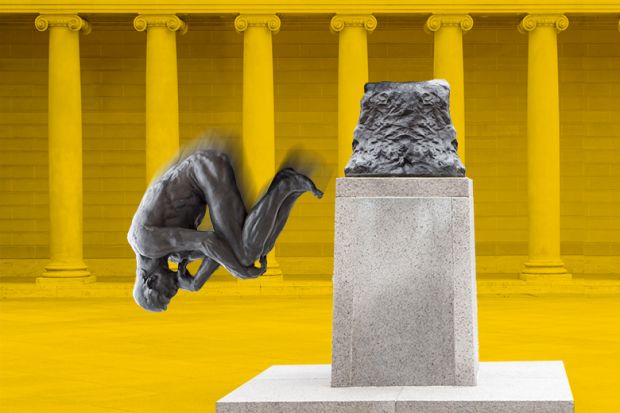
THE MASS SUICIDAL PAN ECOLOGICAL CONSUMER PRODUCTS ENTROPIC WORLD FAIR – from @Substack ’s “@blacklodges..” Communist^ in 2
1/2 thanks 2 this whole AI bullshit i’ve learned a lot abt the mechanics, the people, something i’m usually quite happy about & i’ll say this:
what a bunch of unfuckable ../2
Ghastly 1970s Seppo fim-maker and Soon-Yi Previn, whom he married in December 1997
2/2 losers. all that💲all those resources & all it.. is scams, tools that don’t work & a werner herzog greynss of existence fuck outta here: you shld be ashamed of yrslvs\\
WRITING 4 societies-w-liveable-nvrnmnt not Social-“envrnmnts” or SOCIAL ECOSYSTEMS 4 the 💕of 🐀 arsed MINDFUCK and spoiled stupored psycho-spiritually deracinated consequently SOCIALLY DISACCULTURATED WITH SLIPPING-FAST Stanford Binet IQ scores ex private school kids’ 19th century Euro & Ivy League universe-ities Laïcité – ité -ité -ité 18C Newtonian quadratic equation
(pronounced loh-see-tay) is the French concept of strict state secularism that mandates the absolute separation of the state from religious institutions. [1, 2] [o] ften translated simply as “secularism”, it goes deeper in French culture as a constitutional principle ensuring government neutrality toward all religions and non-believers\ AI SHIT FOLLOWS ☞/➡︎ ❝ [y] ou can learn more about its history and legal standing on Wikipedia’s Secularism in France or read an analysis by The Belfer Center. [1, 2, 3, 4, 5] ❞ [,]
• pointy-hatted & Barny Googol with the goo-goo-gooh-guhgl-e 👀 mental age 15-16 undergraduate Micro-quanta in an awesome clockwork Solar- system cum Cirque du Soleil translates from French to English as “Circus of the Sun” of moving mechanical parts “Philosophy” tutorial time-filling mental Youth-club ex Auss-ie 🇺🇸-🇦🇺 Child care centre with sexual violators on $85k GOVERNMENT PAY
• drivel since 14 years of age for Jesus’s loving sake
• JOHN BLUNDELL 🦘🇦🇺🌏
Australia’s Jonno c’est-say 2022 (freshly kicked out of his home on the advices of the Real Estate agent joker in charge of the entire Australian Public Service Phil Gaetjens AND on one of life’s little adventures learning to live with an Auss-ie business crim lady)
ⱽ WE – at Billionaire 🐒🐒🐒🐒 – are of course the Wikipedia DRUIDS’ Collective in grey robes & hoodies with long sad faces hovering in the same moment of time in San Fra.. 1 Sansome Street, Suite 1895, San Francisco, California 94104, USA AND born out of oral traditions & ballads celebrating peasant defiance against corrupt authority in northern England notably the city of Nottingham & Sherwood Forest 6 to 8 centuries ago (new studies funded & undertaken so we’ll get back to y’all soon as)
Colleague in the grand essay towards human understanding after Johnny Locke said to be antisemitic how’s that for postmodern psycho-news from 330 years ago ?
Not only am I yea tired of Reddit Medium Fatuousgram Look @ my beautiful soft pussy & well come 2 my count-tree
Mom’s-basement conversations THEY ARE INDIRECTLY DESTROYING THE EARTH OUR ONLY HOME
by squandering the most precious resource that humanity has at its disposal : intelligent adult conversation
John Blundell
Internet & education reform
Human neurocognitive health
2-5 set series quantum relations logic
Replacement of ‘brain-dead’ leadership in 193 countries
AS i CANNOT momentarily copy my and Wikipedia’s @Substack text here you may download the Mother-trucker
I’ll pop the full text up on LinkedIn, XComms, Substack and here (my WordPress0 as soon as able and free of other duties..
John BLUNDELL
Genuinely post Socratic and post post (Edward de Bono dcd: The Happiness Purpose 1977) Socratic 2-5 set series quantum relations Thematics-logic
Neurocognitive-health, internet involution and the IMMEDIATE reform OF 25K universities + 250,000 to 300,000 secondary schools worldwide, serving an estimated Number of pupils in secondary education worldwide 2000-2024 650 million pupils.
Kangaroos, meat pies, Holden cars/ Macca the Quacker on a Sunday morning and private schoolboys beginning 2 grow-up run amok with our once-living now near-completely derivative, inane depressive mental illness -generating, -driving, -powering and soon -exploding at a Bourgeois Convenience Facilty near you (God Forbid but what pious absurdist hope is there this side of Buckley (a much-misunderstood ancient white-skinned Victorian William Buckley (1780-1856), ‘wild white man..’ born at Marton, near Macclesfield, Cheshire, England, the son of a small farmer) ‘s or nun?)
James Michael Johnson (born January 30, 1972) is an American lawyer and politician serving as the 56th speaker of the United States House of Representatives
Dedcation of this document Old Hugh, Adelaide University, and the Boys Light Up boys of Sick City South Australia’s 1960s Dutton, Harris, Phillips, Rude, Ramsey &c +
Hugh Bawn was a modern hero, a visionary urban planner, a man of the people who revolutionized Scotland’s residential development after the Second World War. But times have changed. Now, as he lies dying in one of his own failed buildings, his grandson Jamie comes home to watch over him. The old man’s final months bring Jamie to see what is best and worst in the past that haunts them all, and he sees the fears of his own life unravel in the land that bred him ⭆ OUR FATHERS Andrew O’Hagan 1999
THAT thinking, that ratiocination, that dumbarsed dialectics (⣿of the Damned author John Blundell writing for Three-continental distribution, reproduction, exchange, academic interest AND ONGOING MENTAL DEVELOPMENT as Green Economist newsletter, historical TIME 1993) is of no greater psychospiritual or sociocultural value to humanity than mediæval Columbus-Cortes-Henry VIII- ‘Cardinal Pole*’ raison d’ètat nation (C7) scaled tribal barbarism (ideological neo-liberalism after Margaret Thatcher 🇬🇧)
≣4 ME at the beginning of my adult career as an authentic prsn-plc-time-event-future (s) 5 set quantum relations logician – which would sure make me able to claim the public identity of philosopher if I could be bothered, medieval European philosophy being such a lost courageous argument against the august 1859 High Church of England Micro-objects & mechanomorphic relations muddled 180° off-the-pace-pitch-temper-mood pedantic anarchic indeed social darwinist AI word scramble “Just-make-stuff-up”/ “Hey Handel sure could write BANGERS” (Genevieve Laing Australia @ABC NEWS “ABC Classic” radio station of even date say age seventeen not a Moo-vie Quean – call the Historic or Academic time 1967 – there was the Grand Inquistor chapter in Fyodor Dostoevsky’s TBK recommended by Nicholas Main Wilson, AND
Accreditation & Endorsement from the central Adelaide Hills of South Australia 9:21 AM Give us a date/ aarghh\ 20O72026
WITH MY THNKS AS WAY TOO OFTEN 2 the ancient & honourable grey-robed (NO SEPPO SPELLINGS HERE AARON WE MAY ONLY SURVIVE WITH early post WWII Australian ENGLISH ‘landguage’) Wkpd DRUIDS’ COLLECTIVE of Sacramento & Sherwood Forest late 12th and early 13th centuries, specifically during the reigns of King Richard the Lionheart and King John
Unking John 🦘🇦🇺🌏≡🫥🔚
*Said by my bitterly poor County Cork 1856 emigrant Mother’s-side forebears or ancestors, in particular, my beloved orphaned dad to be one of their “family” ..
Welome everyone to the internet involution – The Panopticon’s take ☞
“I’ve had a theory percolating in the back of my head that the state, which reconfigured itself from feudalism to capitalism as the new, evolving mode of power, is working it’s way toward totalizing power that no longer requires the capitalist configuration. I hope I’m wrong, because this would mean a level of confidence in obedience to state authority on a level we’ve not experienced before. The main driver of this theory is 2-fold. 1st, the rise of AI has a consumer paradox. If AI replaces labour, then there is no currency circulating, and no mechanism for the accumulation of capital. 2nd every move by virtually every aspect of the state over the last decade has focused on data collection. Put these two together, and you don’t have capitalists collecting data so they can sell you stuff, you have statists collecting data so they can control you directly without the intermediary of capital. And if they can complete the panopticon, then they wont have to exert any effort to control you.
“ They will simply manipulate perception to drive behaviour wherever they want.
“For now this is just a theory in the back of my mind, but essays like this thoughtful one by @Black Lodges explore the rich philosophical analyses that probably wont help to dissuade my from my line of thinking.”
When Mental Health is an illness (and neurodivergence a diagnostic category) don’t expect more than 5% to understand weather systems, the motive power of the sun, or indeed that the Earth rotates eastward..
Every summer, heatwaves are narrated as if they were disaster movies. We are shown maps turning red, temperature records being shattered, and endless survival tips on how to stay cool. But when heat is described only as weather, history gives way to fate.
Heat appears as a natural calamity to endure and adapt to, rather than as a socio-ecological crisis shaped by history.
The climate crisis is not a mere ecological accident of the Earth system, but the historical expression of a global regime of capitalist accumulation. Under fossil capitalism, accumulation has long relied on turning the atmosphere into a planetary waste dump.
The temperatures Europe is reaching today cannot be understood as purely natural. The same atmospheric pattern that decades ago might have produced 35–37°C can now generate 39–43°C because it operates on a much warmer climaticbaseline.
Responsibility is unequal because emissions accumulate over centuries. Today’s heat is inseparable from generations of carbon emissions tied to fossil capitalism, extraction, colonial processes, and unequal ecological exchange.
This produces a profound asymmetry: those most historically responsible for the crisis — above all the Global North — are often best equipped to shield themselves from its effects, while those who contributed least will suffer the most.
Vulnerability is unequal because the ability to survive a heatwave depends on concrete material conditions: housing quality, insulation, access to air conditioning, and the ability to afford keeping it running amid rising energy costs. It depends on whether one can stop working when temperatures become dangerous, or whether survival itself requires remaining exposed.
Every heatwave becomes a social X-ray of capitalism: a map of class power, revealing who can buy protection and who is left exposed to suffering and death.
❝Alexithymia Is Not One Story,❞ by some Post-society unknowing 1987 women’s magazine Thatcherite billing herself for For-profit commercial or business purposes as The Cognitive Ecologist I Neurodivergent system builder I Author of .. I Omnisyntra Journal I 5.1K subscr…
⭆ ❞My most esteemed readers in 193 countries and in semi-autonomous regions excluded from world political affairs on the psycho-neurotically demented barbaric racist misogyne Age of Romance Abrahamic ‘faiths’ foundation myths and popular culture storytelling for the express and punitive purposes of neurocognitive regimentation and life-long hegemonic capture of senior primary and junior high youngsters who possess no developed mental capacity for relationship-, social-. environmental- or indeed macro-spiritual conversation with any significant other, being naturally and entirely healthily at the instantly or in athletics instantaneously) co-ordinated ‘LCQS’ most commonly Micro-quanta thoughts & actions and ‘RCQS’ (all hesitant contemplative ‘thoughtful’ or pensive macro (conceptual) ideation re person (s), place. event, environment and futures) mental development Professor Piaget’s 1934 and Twentieth-century Common Era Psychiatry’s Concrete-operational thinking or ❝Object-relations ⇐❞
Raison Drive Littlehampton South Australia was my home-patch for 4 5/12 – the bizarrerie of the f_cker !
John Blundell
the genuinine organic fresh & dry person busted by the ALP, the LPA and LUNATIC CENTRISTSno less than 30 years ago and still propertyless, personal assets-freeᵛ & entirely parsimonious – a good day to you (all)
Immediate Reform of 25,000 universities retiring rhetoricians, psycho-babblers, polemicists and misanthropes
Immediate introduction to all other educational facilities and publicly funded or ‘tax-breaked’ human SERVICES of the new Neurocognitive Health and 2 to 5 set series quantum relations logic
The prosecution of all major organised crime operatives, ‘godfathers’ and THEIR politicians in congresses and governments
^prowed, prahu’ ed or contumaceously proud owner of about $1,200 worth of household stuff & B through D litbooks (libraries & all business records stolen 17/4/1998, 1/7/1999 and in the first two decades of the 21st Cwhen i apparently ‘belonged’ to cops and gangsters in a remote rural town yeehaarghghghghgh)
The future may not be redistribution. It may be surveillance, control, repression
MIT has come out with a paper on AI and government repression that uses a rigorous model to show what most of us already knew through lived experience, intuition and pattern recognition. The abstract concludes:
[C]apital accumulation and thus greater automation encourages the capitalists to support a coup against democracy and set up a repressive system.
It conveniently doesn’t seem to offer any solutions. But it is validating to see the technical reasoning behind the phenomenon we’re witnessing.
Milan professor, Valerio Capraro, summarizes it like this.
As automation shifts income from labor to capital, workers become poorer, revolt becomes more likely, and elites face a choice: redistribute, slow automation, or repress.
But here is the issue: redistribution becomes more expensive precisely when automation makes labor less necessary.
Repression, by contrast, becomes relatively more attractive.
Therefore, elites may prefer repression to slowing down automation or redistributing its gains. This is the dark political economy of AI.
So far, much of the debate has been about: “AI may take your job.”
But economistar Daron Acemoglu, and colleagues Arda Gitmez, and Mehdi Shadmehr make a deeper point: AI may reduce the political need to care whether you have a job.
The future may not be redistribution. It may be surveillance, control, repression.
Full Paper →https://economics.mit.edu/sites/default/files/2026-06/Automation%20and%20Repression.pdf
Invoking AI’s harm to critical thinking is a weak defence for universities
Calls to ditch AI because it is destroying students’ analytical skills ignore institutions’ questionable record at developing complex reasoning, says Ian Richardson
A historical pattern has emerged in higher education when it comes to new technology. Something arrives. Institutions recoil. Arguments are voiced about standards, about the sacred nature of knowledge, about the irreplaceable human element of learning. In time, the technology is accepted and the arguments are quietly retired. Until the next thing arrives – when the same reassuringly familiar laments can be aired once again.
It’s interesting to question where we might have been if only we’d managed to resist the tide of technological “progress”. The printing press wouldn’t have debased the authority of texts by disintermediating venerable and learned hands. The photocopier wouldn’t have allowed accumulation of vast quantities of text without proper engagement. Scientific calculators wouldn’t have hollowed out numerical intuition. Searchable databases wouldn’t have stripped away contextual judgement by preventing us from spending years thumbing card indexes and scouring dog-eared journals. Word processors wouldn’t have produced sprawling, undisciplined prose. The internet wouldn’t have degraded research quality and distracted lazy students with a swamp of unreliable content.
Each generation of educators has convinced itself that new technology poses a unique threat to authentic learning, intellectual rigour and human connection – only for those fears to fade as the technology becomes normalised. It’s a pattern that reveals a principled and cautious engagement with technological change and, more discreetly, a near-perfect record of confusing intellectual virtue with institutional and parochial self-interest.
In a Guardian article published on 10 March, a dozen humanities professors describe mostly despairing experiences at the arrival of artificial intelligence in their classrooms. “It’s driving so many of us up the wall,” confided one. Another described it as “the bane of [her] existence” and wished she could “push ChatGPT off a cliff”. Elsewhere, the question of what it would do for us as a species reflected broader existential concerns at AI’s emergence ..
These are not fringe voices. They’re senior academics at Stanford, Berkeley and Penn State, among others. And the argument they’re making is, at its heart, a straightforward one: AI threatens critical thinking, and critical thinking is what universities exist to cultivate.
It’s a powerful argument, and one that has become a rallying cry within the sector. It’s also, when held up to even modest scrutiny, one that many institutions are making with little support beyond fine words and good intentions.
It’s 15 years since Richard Arum and Josipa Roksa’s Academically Adrift was dropped on an unsuspecting sector, highlighting the roughly 45 per cent of US undergraduates who demonstrated no significant improvement in critical thinking, complex reasoning or writing skills during their first two years of college – findings that were later extended to all years of college life and, the authors claimed, left graduates poorly prepared for workforce transition.
Not everyone agreed, of course. Some suggested flawed methods could account for the findings, while others pointed to differences between disciplines. Elsewhere, studies were produced showing higher levels of gain. Nevertheless, the central criticism landed, and the sector was clearly on the defensive. Outcome-based learning approaches were embedded, writing across the curriculum programmes were expanded, “high-impact practices” were formalised, and the Collegiate Learning Assessment (CLA/CLA+) was adopted by many as a measure of value-added learning. These developments, initiated in the US, have significantly influenced international approaches – notably through quality assurance and accreditation frameworks designed to address rising demands for accountability.
However, a decade later, the 2022 OECD report Does Higher Education Teach Students to Think Critically?, which assessed more than 120,000 students across six countries, found only a modest improvement in students’ abilities. Given “the importance that most higher education programmes attach to promoting critical thinking skills, the learning gain is smaller than could be expected”, it reported. With half of all exiting students performing at the two lowest levels of mastery, the conclusion was unequivocal: a university qualification is not a reliable measure of critical thinking expected by the global marketplace.
Despite this, critical thinking appears prominently in institutional mission statements, quality frameworks, programme descriptions and learning outcomes across the sector. But the gap between aspiration and evidenced attainment remains wide – and it’s clear that institutions have been evasive in this area when it comes to comparative measures. The OECD’s Ahelo project, for instance, was abandoned in 2015 because of insufficient institutional support – notably from elite universities. As Andreas Schleicher, director for education and skills at the OECD, said at the time, the biggest resistance had come “from those institutions that fear they will never do as well as their reputation suggests”.
So what is actually being defended in the Guardian article?
The professors interviewed are intelligent people grappling with a genuine disruption. AI does present real challenges to meaningful assessment. The case for preserving the productive difficulty of unaided thought – the struggle with a text, the construction of an argument from scratch – is defensible and important. The argument that universities must move towards metacognition, teaching students to interrogate their own reasoning rather than merely deploying it, reflects serious engagement.
But the framing – seriously? “Self-lobotomisation.” Students deliberately made “helpless” by tech companies. “Intellectual ravages.” AI threatening us “as a species”. Beneath the intellectual veneer lies an emotional texture entirely familiar from the history of technological resistance: the language of desecration, of theft, of an irreplaceable thing in jeopardy.
And what is this irreplaceable thing, exactly – unaided human cognition, or something else entirely? For many, the concerns are sincere: a genuine belief that something important about how humans learn and reason is being bypassed, and a commitment to students that deserves to be taken seriously. But sincerity and self-interest are not mutually exclusive.
Resistance to technology has never really been about technology – it is about what technology does to existing structures of power and privilege. Those structures depend on control, and technology has a habit of loosening it.
Each transformation has been resisted most fiercely by those with most to lose. AI threatens to perform functions that have long conferred authority and status on those who perform them – and it is doing so at the very moment when institutional performance is being questioned like never before.
None of this argues against taking AI’s risks seriously, but it does argue that we need to be driven more by a sense of what we’re trying to achieve than by what we’re trying to defend (not least because the thing we’re defending is on rather shaky ground). Responses to AI within the sector – for instance, oral examinations, competency-based assessment, explicit instruction in critical reasoning – are frequently presented in opposition to the technology when in fact, they all can be facilitated rather than undermined by AI. AI’s broader potentialities must be seriously explored – the flat suggestion that the technology is antithetical to the development of critical enquiry is emotional, oversimplistic nonsense.
Professors are asking their students to trust that the struggle is worth it – that the friction of unaided thought produces something no machine can replicate. They may well be right. But a sector that has spent 15 years evading serious measurement in this area, and 500 years resisting technologies that threatened its authority, cannot demand that trust on faith alone.
The critical thinking stance is available to higher education, but it has to be earned – and not by pushing technology off a cliff.
Ian Richardson is a faculty member and director of executive education at Stockholm Business School at Stockholm University. He is co-founder of the national Swedish programme AI for Executives, which seeks to drive board-level understanding and organisational adoption of AI across industries and sectors
Rather than resisted by those with mot to use another view is that the “transformation” have been most resisted by those with the greatest understanding of what is at stake. Deeply disappointing to read another advertisement masquerading as an article. If the critical thinking stand has to be earned perhaps the author could be hoist on their own petard.
#2 Submitted by oliver…. on April 15, 2026 – 7:41am
This piece is upside down. Universities are now the only source of critical thinking really, and new tech seems to be now linked to oligarchy and authoritarianism. Students and academics are right to distrust it.
#3 Submitted by m.o…. on April 15, 2026 – 10:04am
The best students strive to develop critical thinking and this is evident in their contributions to discussion, oral presentations, in dissertation supervision meetings and written work. Such students tend to be wary of AI and are are able to justify their distrust of it. Importantly, the student’s critical thinking is consistent and can be tested at any time including via impromptu questioning about a text or their own work. They are a joy to teach. AI cannot beat this.
#4 Submitted by t…. on April 15, 2026 – 2:40pm
“He is co-founder of the national Swedish programme AI for Executives” ’nuff said
#5 Submitted by … on April 15, 2026 – 3:55pm
In fairness, just because he has a role to perform, does not mean he does not believe in the values of that role. People who strongly believe in EDI for example, often take up roles in that sector, people who believe in education, become teachers.
#6 Submitted by tom…. on April 23, 2026 – 3:49am
Fair critique but what I feel is missed is that AI is not just another technological innovation. Word processing is a replacement technology, not a disrupting technology as AI is.
#7 Submitted by mlarsen… on April 24, 2026 – 1:00am
Those joining the unconstrained AI fan club seem to have lost sight of the purpose of higher education. Although there’s no doubt students will use AI professionally, I believe we have a moral and ethical obligation to ensure they retain the critical thinking and communication skills to productively participate in society and the economy. Redefining learning to match the products released by Silicon Valley is the very definition of cognitive surrender
Trouble at Mill with our Sans Culottes (sans-culottes meaning “without knee breeches” -the radical and militant working-class people of late 18th-century France. As the driving force of the French Revolution, they distinguished themselves from the wealthy elite by wearing long trousers instead of the fashionable, aristocratic silk knee breeches (culottes)).
April 20, 2009, during an address to the State Library of South Australia in Adelaide. [1]
A two-speed future?
We set to work, we announced a plan, we said we were going to have a National Broadband Network, we said we’d invest up to $43 billion, we actually believe this is the infrastructure of the 21st century, just as railways, roads and the rest, telegraph, were in the 19th century and in the 20th century..
The challenge of managing two-speed economies both nationally and at a global level is to find a compromise..
This is an important investment for the future, from which each of the businesses represented in this room will benefit enormously, in ways which the economy at large hasn’t by and large thought through yet. New ways of doing business, new ways in which you can actually sell products across the tyranny of distance which has so far haunted so much of our small business community, or those which are geographically isolated from major markets both here and abroad. This is a fantastic innovation. Also for the way in which Government does business in delivering basic and efficient services and saving public finance, for example in simply the ability to transfer electronically and at speed, patient controlled electronic health records..
A holistic approach, looking at supply and demand both on a local and national scale, and in terms of interconnected economies, will always be necessary for those making decisions at the level of economic policy..
The aim must be to stimulate growth in areas facing economic slowdown whilst trying to avoid over inflation during an unexpected resource boom. This requires a dynamic approach, and one that must be fine-tuned constantly..
This article was originally published 9th June 2017 by ICAS. You can read the article and see the full edition here.
NEWS
In June 2026, Anna’s new Quarterly Essay ‘The God we Made: The Threat and Promise of Artificial Intelligence’ is released..
Prime Minister Speech to the Business Council of Australia Canberra 22 June 2010..
This is a turbo-charging piece of infrastructure which this Government has brought about and is important because unless we have infrastructure at global standards, unless we have skills at global standards, we will not have productivity growth at global standards..
The Cartesian psycho-babblers..
Sweden’s contribution to Age of Romance raison d’etat Philosophy (Warrior-prince European adventurer scientist explorer poet & ‘maiden-deflowerer’ psychopathology 1492 – 1509 to the beginning of the 21st century of the common era noted to have been Rene Descartes contracting pneumonia and obligingly dying and at this precious moment in Ten-thousand years of humanity organised in highly soil-and-garden-management productive FOOD-SECURE lands with recognisably representative citizen-participatory pre liberal-democratic central administrations I’ve momentarily lost track & sign & aegis – my goat-skin, my kabarlic masonic or Royal & Ancient Order of Mental Juvenile Bidden Buffaloes Goat-skin – my Kingdom for my goat’s-kin, man – of the @Substack Cartesian Randite male-ego youkneeverse crappola contributor here but am sure we’ll catch up ..





 This space is rooted in reflection, reclamation, and relational truth.
 Share