
Multiple Football-field-scale Warehouses of Junkfo on wORD gAMES..

❝Alexithymia Is Not One Story,❞ by some Post-society unknowing 1987 women’s magazine Thatcherite billing herself for For-profit commercial or business purposes as The Cognitive Ecologist I Neurodivergent system builder I Author of .. I Omnisyntra Journal I 5.1K subscr…

β­† ❞My most esteemed readers in 193 countries and in semi-autonomous regions excluded from world political affairs on the psycho-neurotically demented barbaric racist misogyne Age of Romance Abrahamic ‘faiths’ foundation myths and popular culture storytelling for the express and punitive purposes of neurocognitive regimentation and life-long hegemonic capture of senior primary and junior high youngsters who possess no developed mental capacity for relationship-, social-. environmental- or indeed macro-spiritual conversation with any significant other, being naturally and entirely healthily at the instantly or in athletics instantaneously) co-ordinated ‘LCQS’ most commonly Micro-quanta thoughts & actions and ‘RCQS’ (all hesitant contemplative ‘thoughtful’ or pensive macro (conceptual) ideation re person (s), place. event, environment and futures) mental development Professor Piaget’s 1934 and Twentieth-century Common Era Psychiatry’s Concrete-operational thinking or ❝Object-relations β‡βž

Forwarded this email? Subscribe here for moreMapping Minds, Reclaiming Systems: Notes from The Cognitive EcologistAlexithymia Is Not One StoryOn the single-cause stories we tell about not having words for feeling β€” and why the truth is plural.The Cognitive EcologistJul 6 READ IN APP Alexithymia gets handed around like a verdict. Difficulty naming and locating your own emotions β€” that’s the clinical shorthand β€” and the moment the word lands on someone, a whole story tends to arrive with it, already finished. I want to slow that story down, because it’s usually two different flat ones, and neither is true for everyone.The first flat story is the deficit one: you don’t really have feelings. You’re cold, or empty, or broken in the place an emotional life is supposed to be. It gets weaponized in relationships and misapplied in clinics, and it’s almost always wrong about what’s actually happening inside the person.The second flat story is newer and gentler and just as total: alexithymia is a trauma response, full stop. For some people that is exactly, precisely true, and naming it is a relief that reorganizes a life. But said as the only story, it does its own quiet harm β€” it tells the person whose wiring was simply always like this that they must be carrying a wound they can’t find, and it turns a description of terrain into an accusation about the past.The problem was never that any of these stories is false. The problem is telling one of them as if it were all of them.For a long stretch of my life I wondered if I had it β€” and I wondered because of an excess, not an absence. My feelings arrived in such intense, layered waves that I couldn’t get a single clean word around any of them. I was feeling everything and nothing at once, a whole symphony playing with no sheet music I could read aloud. That isn’t the deficit story. And it wasn’t, in any simple sense, only the trauma story either. It was a translation problem: the feeling was fully present and completely real, and the machinery that turns feeling into a namable, speakable word was doing something other than what the world expected.Once I could see it as translation rather than absence, the shame lost its grip. I wasn’t missing an emotional language. I was fluent in one the dominant culture doesn’t read β€” a language of sensation, image, pressure, and pattern that arrives long before, and sometimes instead of, the tidy sentence β€œI feel sad.”Here’s the fuller picture, the one that actually holds. Alexithymia is not a single condition with a single cause. It’s a crossing that several different roads happen to arrive at. For some it’s constitutive β€” a feature of how their nervous system reads its own interior, present from the start, no wound required, common among autistic people whose interoception simply works differently. For others it’s genuinely trauma-shaped, a protective distance the body learned. For others it’s a translation gap, like mine, where the feeling is loud and the word is slow. And for a great many people it’s more than one of these at once, braided so tightly that arguing over the single true cause misses the whole texture of it.This is what cognitive ecology asks everywhere: describe the terrain, don’t diagnose the person from across the room. The useful question is never β€œwhat’s the one thing wrong here.” It’s β€œwhat is this particular mind actually doing, in this particular body, shaped by this history and environment β€” and what would help?” Two people can carry the same word and need almost opposite things. One needs the grief of an old wound witnessed. Another needs to be told, firmly and kindly, that nothing broke β€” this is just how they’re built, and it was never a deficit.Why does the single story matter? Because people organize their whole self-understanding around the story they’re handed. Give someone the deficit story and they’ll spend years apologizing for a coldness they don’t have. Give someone the universal-trauma story and they’ll hunt for a wound that isn’t there, or feel like a fraud because healing didn’t hand them the fluency it promised. The kindest, most rigorous thing we can do with a word like this is refuse to let it flatten β€” hold it open long enough for the actual person to appear inside it.I’ve written about this more than once over the years, and I’ve held it differently at different times, because I keep learning. That’s allowed. Understanding is supposed to move. Alexithymia is not one story. It’s a place several different roads arrive β€” and the person standing at that crossing deserves to be met as themselves, not as the ending someone else already wrote for them.Some of what pushed me to write this came from a reader who felt my book, Cognitive Ecology: Mapping Your Mind for Self-Understanding, leaned too hard on the trauma story for alexithymia. They were right to raise it. I take feedback seriously, even when some of it stings β€” and sometimes it stings rightfully so. You don’t have to leave it anonymously in a review, either; you can always come straight to me.I wrote that book with almost no money, from exactly where I stood at the time writing through burnout β€” my own mind, my own words, years of mapping the terrain as it unfolded in me. That’s what it is: the raw unfolding of one mind. It was never meant to hand you my map and make it yours. It was meant to be a doorway β€” one doorway β€” into the work of mapping your own. A second edition is coming soon in digital, shaped in part by exactly this kind of feedback, and you can order it directly from me. If something lands wrong, tell me. Feedback is how the work stays honest.β€” SherKaleidoscope Systems opens soon β€” a home for this way of thinking. You can leave your name at kaleidoscopesystems.org.Consider becoming a paid subscriber.Upgrade to paid🌿 This space is rooted in reflection, reclamation, and relational truth.
If this work resonates with you, consider supporting it by sharing or gifting a subscription.
Your support helps nourish this evolving frameworkβ€”and extends it to others seeking gentler systems, deeper belonging, and a map that makes room for their whole mind.Give a gift subscription Share  LikeCommentRestack Β© 2026 Sher Griffin
4213 SW Huber St, Portland, OR 97219
UnsubscribeStart writing

Raison Drive Littlehampton South Australia was my home-patch for 4 5/12 – the bizarrerie of the f_cker !

John Blundell

the genuinine organic fresh & dry person busted by the ALP, the LPA and LUNATIC CENTRISTS no less than 30 years ago and still propertyless, personal assets-freeα΅› & entirely parsimonious – a good day to you (all)

Immediate Reform of 25,000 universities retiring rhetoricians, psycho-babblers, polemicists and misanthropes

Immediate introduction to all other educational facilities and publicly funded or ‘tax-breaked’ human SERVICES of the new Neurocognitive Health and 2 to 5 set series quantum relations logic

The prosecution of all major organised crime operatives, ‘godfathers’ and THEIR politicians in congresses and governments

^prowed, prahu’ ed or contumaceously proud owner of about $1,200 worth of household stuff & B through D lit books (libraries & all business records stolen 17/4/1998, 1/7/1999 and in the first two decades of the 21st C when i apparently ‘belonged’ to cops and gangsters in a remote rural town yeehaarghghghghgh)

@MIT Study Examines Downside

The future may not be redistribution. It may be surveillance, control, repression

MIT has come out with a paper on AI and government repression that uses a rigorous model to show what most of us already knew through lived experience, intuition and pattern recognition. The abstract concludes:

[C]apital accumulation and thus greater automation encourages the capitalists to support a coup against democracy and set up a repressive system.

It conveniently doesn’t seem to offer any solutions. But it is validating to see the technical reasoning behind the phenomenon we’re witnessing.

Milan professor, Valerio Capraro, summarizes it like this.

As automation shifts income from labor to capital, workers become poorer, revolt becomes more likely, and elites face a choice: redistribute, slow automation, or repress.

But here is the issue: redistribution becomes more expensive precisely when automation makes labor less necessary.

Repression, by contrast, becomes relatively more attractive.

Therefore, elites may prefer repression to slowing down automation or redistributing its gains. This is the dark political economy of AI.

So far, much of the debate has been about: β€œAI may take your job.”

But economistar Daron Acemoglu, and colleagues Arda Gitmez, and Mehdi Shadmehr make a deeper point: AI may reduce the political need to care whether you have a job.

The future may not be redistribution. It may be surveillance, control, repression.

Full Paper β†’https://economics.mit.edu/sites/default/files/2026-06/Automation%20and%20Repression.pdf

Valerio’s Linkedin Post β†’ https://www.linkedin.com/posts/valerio-capraro-675235a9_brutal-paper-automation-may-lead-to-political-share-7473400969611874304-FsDd/

George Zeller adds some additional insights on the topic β†’ https://www.linkedin.com/posts/georgzoeller_kind-of-spelling-out-the-obvious-because-share-7473581744387039232-9yS8/

AI as Dumbdown/ Notes & Papers..

Invoking AI’s harm to critical thinking is a weak defence for universities

Calls to ditch AI because it is destroying students’ analytical skills ignore institutions’ questionable record at developing complex reasoning, says Ian Richardson

Published 30/4/2026

Ian Richardson

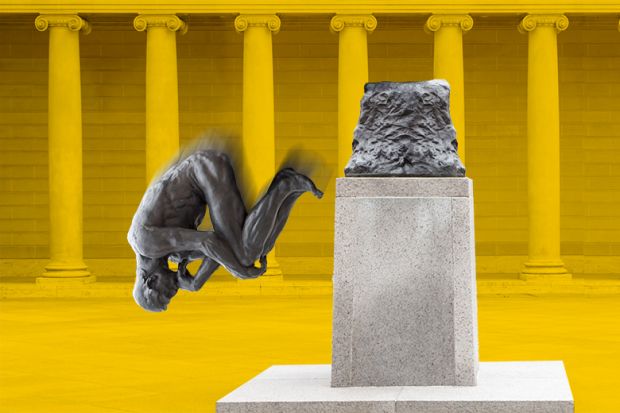
Rodin's Thinker statue falling from its pedestal. To illustrate that calls to ditch AI because it is destroying students’ analytical skills ignore institutions’ terrible record at developing complex reasoning.

Source: David Madison/Getty Images (edited)

A historical pattern has emerged in higher education when it comes to new technology. Something arrives. Institutions recoil. Arguments are voiced about standards, about the sacred nature of knowledge, about the irreplaceable human element of learning. In time, the technology is accepted and the arguments are quietly retired. Until the next thing arrives – when the same reassuringly familiar laments can be aired once again.

It’s interesting to question where we might have been if only we’d managed to resist the tide of technological β€œprogress”. The printing press wouldn’t have debased the authority of texts by disintermediating venerable and learned hands. The photocopier wouldn’t have allowed accumulation of vast quantities of text without proper engagement. Scientific calculators wouldn’t have hollowed out numerical intuition. Searchable databases wouldn’t have stripped away contextual judgement by preventing us from spending years thumbing card indexes and scouring dog-eared journals. Word processors wouldn’t have produced sprawling, undisciplined prose. The internet wouldn’t have degraded research quality and distracted lazy students with a swamp of unreliable content.

Each generation of educators has convinced itself that new technology poses a unique threat to authentic learning, intellectual rigour and human connection – only for those fears to fade as the technology becomes normalised. It’s a pattern that reveals a principled and cautious engagement with technological change and, more discreetly, a near-perfect record of confusing intellectual virtue with institutional and parochial self-interest.

In aΒ GuardianΒ article published on 10Β March, a dozen humanities professors describe mostly despairing experiences at the arrival ofΒ artificial intelligenceΒ in their classrooms. β€œIt’s driving so many of us up the wall,” confided one. Another described it as β€œthe bane of [her] existence” and wished she could β€œpush ChatGPT off a cliff”. Elsewhere, the question of what it would do for us as a species reflected broader existential concerns at AI’s emergence ..

These are not fringe voices. They’re senior academics at Stanford, Berkeley and Penn State, among others. And the argument they’re making is, at its heart, a straightforward one: AI threatens critical thinking, and critical thinking is what universities exist to cultivate.

It’s a powerful argument, and one that has become a rallying cry within the sector. It’s also, when held up to even modest scrutiny, one that many institutions are making with little support beyond fine words and good intentions.

It’s 15 years since Richard Arum and Josipa Roksa’s Academically Adrift was dropped on an unsuspecting sector, highlighting the roughly 45 per cent of US undergraduates who demonstrated no significant improvement in critical thinking, complex reasoning or writing skills during their first two years of college – findings that were later extended to all years of college life and, the authors claimed, left graduates poorly prepared for workforce transition.

Not everyone agreed, of course. Some suggested flawed methods could account for the findings, while others pointed to differences between disciplines. Elsewhere, studies were produced showing higher levels of gain. Nevertheless, the central criticism landed, and the sector was clearly on the defensive. Outcome-based learning approaches were embedded, writing across the curriculum programmes were expanded, β€œhigh-impact practices” were formalised, and the Collegiate Learning Assessment (CLA/CLA+) was adopted by many as a measure of value-added learning. These developments, initiated in the US, have significantly influenced international approaches – notably through quality assurance and accreditation frameworks designed to address rising demands for accountability.

However, a decade later, the 2022 OECD report Does Higher Education Teach Students to Think Critically?, which assessed more than 120,000 students across six countries, found only a modest improvement in students’ abilities. Given β€œthe importance that most higher education programmes attach to promoting critical thinking skills, the learning gain is smaller than could be expected”, it reported. With half of all exiting students performing at the two lowest levels of mastery, the conclusion was unequivocal: a university qualification is not a reliable measure of critical thinking expected by the global marketplace.

Despite this, critical thinking appears prominently in institutional mission statements, quality frameworks, programme descriptions and learning outcomes across the sector. But the gap between aspiration and evidenced attainment remains wide – and it’s clear that institutions have been evasive in this area when it comes to comparative measures. The OECD’s Ahelo project, for instance, was abandoned in 2015 because of insufficient institutional support β€“ notably from elite universities. As Andreas Schleicher, director for education and skills at the OECD, said at the time, the biggest resistance had come β€œfrom those institutions that fear they will never do as well as their reputation suggests”.

So what is actually being defended in the Guardian article?

The professors interviewed are intelligent people grappling with a genuine disruption. AI does present real challenges to meaningful assessment. The case for preserving the productive difficulty of unaided thought – the struggle with a text, the construction of an argument from scratch – is defensible and important. The argument that universities must move towards metacognition, teaching students to interrogate their own reasoning rather than merely deploying it, reflects serious engagement.

But the framing – seriously? β€œSelf-lobotomisation.” Students deliberately made β€œhelpless” by tech companies. β€œIntellectual ravages.” AI threatening us β€œas a species”. Beneath the intellectual veneer lies an emotional texture entirely familiar from the history of technological resistance: the language of desecration, of theft, of an irreplaceable thing in jeopardy.

And what is this irreplaceable thing, exactly – unaided human cognition, or something else entirely? For many, the concerns are sincere: a genuine belief that something important about how humans learn and reason is being bypassed, and a commitment to students that deserves to be taken seriously. But sincerity and self-interest are not mutually exclusive.

Resistance to technology has never really been about technology – it is about what technology does to existing structures of power and privilege. Those structures depend on control, and technology has a habit of loosening it.

Each transformation has been resisted most fiercely by those with most to lose. AI threatens to perform functions that have long conferred authority and status on those who perform them – and it is doing so at the very moment when institutional performance is being questioned like never before.

None of this argues against taking AI’s risks seriously, but it does argue that we need to be driven more by a sense of what we’re trying to achieve than by what we’re trying to defend (not least because the thing we’re defending is on rather shaky ground). Responses to AI within the sector – for instance, oral examinations, competency-based assessment, explicit instruction in critical reasoning – are frequently presented in opposition to the technology when in fact, they all can be facilitated rather than undermined by AI. AI’s broader potentialities must be seriously explored – the flat suggestion that the technology is antithetical to the development of critical enquiry is emotional, oversimplistic nonsense.

Professors are asking their students to trust that the struggle is worth it – that the friction of unaided thought produces something no machine can replicate. They may well be right. But a sector that has spent 15 years evading serious measurement in this area, and 500 years resisting technologies that threatened its authority, cannot demand that trust on faith alone.

The critical thinking stance is available to higher education, but it has to be earned – and not by pushing technology off a cliff.

Ian Richardson is a faculty member and director of executive education at Stockholm Business School atΒ Stockholm University. He is co-founder of the national Swedish programme AI for Executives, which seeks to drive board-level understanding and organisational adoption of AI across industries and sectors

Read more about: 

European higher education policy

Teaching and learning

Higher education assessment

Artificial intelligence in higher education

Educational technology

Students

European higher education students

RELATED ARTICLES 

ChatGPT is not bullshit – but it is far from perfect either 

By Andrew J. Routledge

24 November

Return of handwritten essays is a hopeless response to ChatGPT 

By Dan Sarofian-Butin

22 August

Dismissing the academic merits of ChatGPT is intellectually dishonest 

By Agnieszka Piotrowska

3 September

ChatGPT drives rise of β€˜flowery language’ in journal abstracts  

By Patrick Jack

2 July

RELATED UNIVERSITIES 

Stockholm University – Stockholm Business School

READER’S COMMENTS (7) 

#1 Submitted by d.j…. on April 15, 2026 – 7:36am 

Rather than resisted by those with mot to use another view is that the “transformation” have been most resisted by those with the greatest understanding of what is at stake. Deeply disappointing to read another advertisement masquerading as an article. If the critical thinking stand has to be earned perhaps the author could be hoist on their own petard.

#2 Submitted by oliver…. on April 15, 2026 – 7:41am 

This piece is upside down. Universities are now the only source of critical thinking really, and new tech seems to be now linked to oligarchy and authoritarianism. Students and academics are right to distrust it.

#3 Submitted by m.o…. on April 15, 2026 – 10:04am 

The best students strive to develop critical thinking and this is evident in their contributions to discussion, oral presentations, in dissertation supervision meetings and written work. Such students tend to be wary of AI and are are able to justify their distrust of it. Importantly, the student’s critical thinking is consistent and can be tested at any time including via impromptu questioning about a text or their own work. They are a joy to teach. AI cannot beat this.

#4 Submitted by t…. on April 15, 2026 – 2:40pm 

“He is co-founder of the national Swedish programme AI for Executives” ’nuff said

#5 Submitted by … on April 15, 2026 – 3:55pm 

In fairness, just because he has a role to perform, does not mean he does not believe in the values of that role. People who strongly believe in EDI for example, often take up roles in that sector, people who believe in education, become teachers.

#6 Submitted by tom…. on April 23, 2026 – 3:49am 

Fair critique but what I feel is missed is that AI is not just another technological innovation. Word processing is a replacement technology, not a disrupting technology as AI is.

#7 Submitted by mlarsen… on April 24, 2026 – 1:00am 

Those joining the unconstrained AI fan club seem to have lost sight of the purpose of higher education. Although there’s no doubt students will use AI professionally, I believe we have a moral and ethical obligation to ensure they retain the critical thinking and communication skills to productively participate in society and the economy. Redefining learning to match the products released by Silicon Valley is the very definition of cognitive surrender

Jerking-class Men Found to be Knob-polishers – Tue 30 Jun – anniversary of the beloved Rosanne Mary Joyner’s Death in Queenstown Tasmania 2012

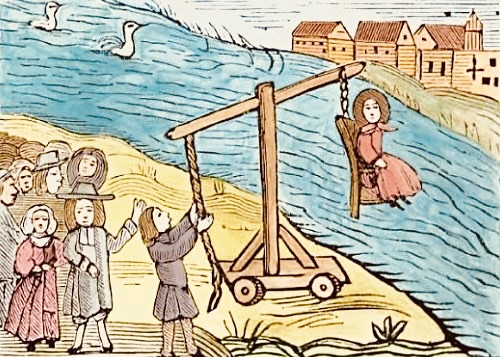
Trouble at Mill with our Sans Culottes (sans-culottes meaning “without knee breeches” -the radical and militant working-class people of late 18th-century France. As the driving force of the French Revolution, they distinguished themselves from the wealthy elite by wearing long trousers instead of the fashionable, aristocratic silk knee breeches (culottes)).

April 20, 2009, during an address to the State Library of South Australia in Adelaide. [1]

A two-speed future?

We set to work, we announced a plan, we said we were going to have a National Broadband Network, we said we’d invest up to $43 billion, we actually believe this is the infrastructure of the 21st century, just as railways, roads and the rest, telegraph, were in the 19th century and in the 20th century..

The challenge of managing two-speed economies both nationally and at a global level is to find a compromise..

This is an important investment for the future, from which each of the businesses represented in this room will benefit enormously, in ways which the economy at large hasn’t by and large thought through yet. New ways of doing business, new ways in which you can actually sell products across the tyranny of distance which has so far haunted so much of our small business community, or those which are geographically isolated from major markets both here and abroad. This is a fantastic innovation. Also for the way in which Government does business in delivering basic and efficient services and saving public finance, for example in simply the ability to transfer electronically and at speed, patient controlled electronic health records..

A holistic approach, looking at supply and demand both on a local and national scale, and in terms of interconnected economies, will always be necessary for those making decisions at the level of economic policy..

The aim must be to stimulate growth in areas facing economic slowdown whilst trying to avoid over inflation during an unexpected resource boom. This requires a dynamic approach, and one that must be fine-tuned constantly..

This article was originally published 9th June 2017 by ICAS. You can read the article and see the full editionΒ here.

NEWS 

In June 2026, Anna’s new Quarterly Essay ‘The God we Made: The Threat and Promise of Artificial Intelligence’ is released..

Prime Minister Speech to the Business Council of Australia Canberra 22 June 2010..

This is a turbo-charging piece of infrastructure which this Government has brought about and is important because unless we have infrastructure at global standards, unless we have skills at global standards, we will not have productivity growth at global standards..

The Cartesian psycho-babblers..

Sweden’s contribution to Age of Romance raison d’etat Philosophy (Warrior-prince European adventurer scientist explorer poet & ‘maiden-deflowerer’ psychopathology 1492 – 1509 to the beginning of the 21st century of the common era noted to have been Rene Descartes contracting pneumonia and obligingly dying and at this precious moment in Ten-thousand years of humanity organised in highly soil-and-garden-management productive FOOD-SECURE lands with recognisably representative citizen-participatory pre liberal-democratic central administrations I’ve momentarily lost track & sign & aegis – my goat-skin, my kabarlic masonic or Royal & Ancient Order of Mental Juvenile Bidden Buffaloes Goat-skin – my Kingdom for my goat’s-kin, man – of the @Substack Cartesian Randite male-ego youkneeverse crappola contributor here but am sure we’ll catch up ..

John Blundell

FER EA AU Pacifica East Antarctica

Woomba-wmba Twmb

Lastly Metaphysics.. around 1400. Genoa perhaps. A Jewish dude.

It occurred to me when in a virtual exile from madmen and politicians in my own country in 1999 – having taken one book with me when i fled my home city early in May the year before, Ernest Becker deceased’s Birth & Death of Meaning, a fairly lame but valid jumping-off point for a study now a 28 year neurocognitive health and post post Socratic thematics logic tour de force and intellectual triumph for all humanity and immediate reform of education at ALL ages & stages of Mental Development (((for that is patently now the only proper sane coherent and comprehensive study not of Man or ANY other stilted 180Β° off-course (the distances & time vexation of say 1905), -direction (quantum nextness, in everyday language Futures) or -purpose ((Governments everywhere MUST WITH THE UTMOST URGENCY disconfuse, discombobulate & DISCONFLATE cause & effect (∴∡ : ∡∴) and so deactivate the Illichian global civil society AI catastrophe))) that took me to mentally grasp myself that commonly Left cerebral QUADRI-sphere thought IS unselfconscious task execution MICRO (behavioural) thought-action RECALL; BUT WAIT, ye psychically embattled AND at most moments clear-thinking Hegel-Stalin line of clahncking binary relations of stuff ((material objects or depersonalised if not commodified -as-objects-of-trade, CIVIL RIGHTS bereft – if NOT indeed violated-trafficked-enslaved-killed-commodotised and HUMAN Rights bereft)) theoreticians and like us all of course wanting to in the ontos-telos instant partnership say 0.1 seconds to 36 hours (do, be and) become theorematicians THAT BEING TRUE the commonly RHS CQ is a comprehensively alert Other-, social group-, societally AND environmentally responsive cultural-ecological conceptualiser rememberer and bear with β€˜β€™me” yet one futher moment a repository some 2,350 years of recent human history gave e the name Plato’s Race-memory, notionally singular thinking, contemplative, hesitant, ideational DEFINITIONALLY SELF CONSCIOUS operations macro metaphysical by definition.

I discovered the MM FIRST logic THEN various branches maths LAST metaphysics some 7yrs ago and the β€œ9th C Baghdad algebraα΅› trope say 37yrs back..

β€Ž^Ψ§Ω„Ψ¬Ψ¨Ψ± (al-jabr )

Outstanding-man theory is philosphically & spiritually dead..

❝

Okay friends.

Please remain calm.

Put down the psychology textbooks.

Take a deep breath.

I need to tell you something.

Maslow was close.

But I don’t think he was right.

Now before every therapist, coach, consultant, and recovering psychology major storms into the comments, hear me out.

Maslow’s hierarchy of needs was revolutionary for its time.

He helped shift the conversation away from pathology and toward human potential.

That’s important.

But every theory is a product of the world that created it.

Every theory.

And I think Maslow made the same mistake modern Western culture makes over and over and over again.

He treated the individual as the primary unit of analysis.

The pyramid asks:

Do YOU have safety?

Do YOU have belonging?

Do YOU have esteem?

Do YOU have self-actualization?

But what if that’s the wrong question?

Or at least an incomplete one?

Because the older I get, the less human beings resemble pyramids.

And the more they resemble ecosystems.

A child cannot self-actualize their way out of neglect.

A worker cannot meditate their way out of exploitation.

A family cannot positive-think their way out of poverty.

A community cannot resilience-train its way out of systemic collapse.

A nervous system cannot mindset-shift its way out of chronic exclusion.

Academic version:

Human flourishing emerges through dynamic interactions between individuals, relationships, communities, institutions, and environments.

My version:

You cannot separate the fish from the water and then spend fifty years studying fish problems.

At some point you have to look at the damn water.

And I think that’s where we are.

We’re living through an era of unprecedented loneliness.

Burnout is everywhere.

Trust is declining.

Community is fragmenting.

People are exhausted.

And our collective response seems to be:

β€œHave you tried working on yourself harder?”

Meditate more.

Optimize more.

Heal more.

Adapt more.

Regulate more.

Perform more.

Journal more.

Download another app.

Buy another course.

Listen to another podcast.

Fix yourself.

Fix yourself.

Fix yourself.

Meanwhile, almost nobody is asking whether the ecosystem itself might be part of the problem.

Maybe belonging isn’t something individuals achieve.

Maybe belonging is something communities create.

Maybe safety isn’t something individuals build alone.

Maybe safety is relational.

Maybe thriving isn’t the top of a pyramid.

Maybe thriving is what emerges when relationships, communities, institutions, cultures, and environments become life-giving enough for human beings to flourish.

And honestly?

The more I study psychology, systems theory, complexity, neurodiversity, social change, and human development, the more I find myself arriving at a surprisingly ancient conclusion:

The individual was never the whole story.

The ecosystem was.

I’m pretty sure my Indigenous ancestors would be looking at our obsession with individual self-actualization and quietly saying:

β€œWell there’s your problem.”

Because they understood something modern Western culture keeps forgetting.

You don’t heal apart from the ecosystem.

You heal within it.

You don’t belong apart from the ecosystem.

You belong within it.

You don’t thrive apart from the ecosystem.

You thrive within it.

The river matters.

The soil matters.

The community matters.

The relationships matter.

The stories matter.

The ecosystem matters.

Maybe thriving was never a pyramid.

Maybe thriving was always a living system.

And maybe the future of human flourishing isn’t waiting for us at the top of Maslow’s hierarchy.

Maybe it’s waiting for us to remember that we were never standing outside the web of life in the first place.

❞

10 – 90m readers thanks are conveyed to https://substack.com/@thecognitiveecologist

πŸ™ŠπŸ™ˆπŸ™‰πŸ™ŠπŸ™ˆπŸ™‰πŸ™ˆπŸ™ŠπŸ™ˆπŸ™ŠπŸ™ˆπŸ™Š

John πŸ¦˜πŸ‡¦πŸ‡ΊπŸŒ

Mediæval

Vanity-inanity THATCHERISM

Edina Monsoon (Saunders) is the middle-aged owner of a failing PR firm in London’s Holland Parkneighbourhood. Her best friend is Patsy Stone (Lumley), an ageing former fashion model who holds a sinecureposition at a top British magazine. The two women use their considerable financial resources to indulge in cigarettes, alcohol (most notably Bollinger Champagne) and recreational drugs and to chase the latest fads in an attempt to maintain their youth and recapture their glory days as Modsin swinging London. The partnership is driven mainly by Patsy, who is both co-dependent and an enabler to Edina.

Their lifestyle inevitably leads to various personal crises, which are invariably resolved by Edina’s daughter, Saffron Monsoon (Sawalha), whose constant involvement in their exploits has left her increasingly bitter and cynical. Edina’s unnamed mother (Whitfield) visits the Monsoon home frequently to keep Saffron company, help with chores and, quite often, taking Edina’s possessions to sell at off car boot sales. The relationship between Edina and mother is strained, as they disagree on virtually everything and are rarely alone together, a relationship with which they are both keen to antagonise each other. Meanwhile, Edina’s affairs are handled, usually very badly, by Bubble (Horrocks), an incompetent, immature and neurotic personal assistant, whose antics frequently lead to further complications for Edina’s business and personal life.

Jesus Wept Tears of🩸🩸🩸

How will you go on with your day after hearing that a father in Gaza, trapped beneath the rubble, begged rescuers not to save him?

Not because he had lost the will to live, but because he could hear the fading breaths of his daughters beneath the debris.

Their tiny hands were holding onto his in the darkness, as if calling for him one last time. He was the father who had always been their safe haven, yet this time he was powerless to pull them from the earth and shattered concrete.

Only his head was visible above the wreckage. He looked into the eyes of the rescue workers with a gaze exhausted by fear and helplessness and said:

“Leave me… my daughters are here. I don’t want to come out alone.”

What heart can bear such a scene? What language can truly describe a father’s agony as he realises he is losing his daughters one by one, while still holding their hands until they grow cold-unable to save them, unable to offer even one final embrace?

How will your day continue after knowing this story? How will you sit at your table in peace, or laugh at something trivial, knowing that a father’s last wish was not to survive alone?

And the question that continues to haunt the human conscience remains:

How much pain must the world witness before it hears the cry of a single father in Gaza?

Source: Clara Amarel

https://substack.com/@robinaqureshi/note/c-277446956?r=22vgiw&utm_medium=ios&utm_source=notes-share-action

Man, Entropy, Organising Forces, the Universe

Substack corespomdent ERALD KOLASI per cortesia (the Monetarism-as-fake-ecosystem global public educator)

“I was building a sandcastle with my daughter yesterday when I realized that I was spending a lot of my time putting up moats, walls, and other defensive structures to protect the castle against the encroaching tide. Eventually the tide won and flooded our castle, though at least the castle lasted for a couple of hours or so.

“Civilization faces a similar conundrum in this millennium, as we are constantly battling against the natural forces of entropy that keep trying to degrade what we have built. We have unleashed or turbocharged many of these forces ourselves, like accelerating global warming, extreme floods and droughts, ocean acidification, excess eutrophication and nutrient loading, dead zones, topsoil erosion, aquifer depletion, mass extinction, biodiversity losses, and a million others. There comes a point when we must realize that aiming for resilience while simultaneously pushing the biosphere towards critical ecological tipping points is a losing strategy. Building more dams, dykes, levees, sewers, storm drains, elevated foundations, and wind-resistant roofs can delay our reckoning, but if we cannot stabilize the biosphere and halt its march towards an ultra-chaotic state, then our fate is just as sealed as that of my tiny sandcastle.”

A READER’S RESPONSE ➀

“We can exist in a universe of entropy because we are an organizing force. Our constant battle is not with nature, it is with our own proclivity of self- destruction. What we’re fighting against are our own best interests.”

ERALD KOLASI RESPONDS ➀

“Shift [the scale] of analysis and we are not an organizing force. Yes we build roads, railways, and skyscrapers, but all of that local order and organization comes at the expense of creating greater chaos and disorder throughout the [troposphere]. The two are directly related, and this is something I discussed in my book as well. The more complex our civilization becomes, the more waste and pollution it dumps and releases into the [troposphere], triggering thermodynamic instability and all the ecological problems we’re now witnessing.”

READERS’ NOTE re misleading terms in common usage such as Planetary-biosphere ➀

Young & sparky ppl ⇔ From your last

πŸŒ“

of GEA &

πŸ’

⌨️

’s’ ☞ IMAGINATIVE RECALL REFRESHER

⏩
😬
❗️

YES – So! Nh-hm – ∴ Bcs – why Ecosystm – human group (2 adults – 9b) Oprtnl. – fnctnl Rltnshps – rltns Ngtt – nvgt RELATIVELY – bsltly Apprntly. – vdntly VANITY – useless Grk – L.

“as” published 19 hours ago on Jack Dorsey CEO’s @XComms

BILLIONAIRE MONKEYS READERS ARE of course MOST AND EVER WELCOME to read the XComms Global | Cut Through the Noise: Get Your Employees’ Undivided Attention with XComms @greeneconomyact where global macro (metaphysical) Platonic Race-memory is ever driven instantly or instantaneously (in ‘high-performance’ athletic activity) by micro quanta thought & action .. newsmedia corporations romantically call those Lived-experience and the incomprehion per DISSEQUENCED (confused ordering of THOUGHTS & ACTION), conflating or mentally reversing CAUSE & EFFECT or Falsely-equivalenced/ solecistic, inane, ‘bad’ METAPHOR or SIMILE rhetoric and sloganeering) ‘re-matricisiing’ or cerebrally reorganising as personal knowledge & ‘memory-bank’ – the Plato RACE MEMORY construct is definitional here – failed RECALL from toddlerhood through death – crudely diagnosed as Alzheimers Disease when in fact a lifelitme’s unlearning socio-cultural re-engineering to serve per the agencies and authorities of Raison-d’etat Neoliberalism notably Education, Arts, Culture, Sciences & Technology the fiscal & colonising interests of the multi $100 billion propertied elites, or Marxian class..

John, Australia

The Rule of Just Law confronted by Gangster Libertarianism circa 2000 Common Era

Junk-fo re Life-skills 4rom “Burning Man”ΒΉ Folk

Great Conference 2026 adjacent Bismarckian 1870 πŸ‡«πŸ‡·-πŸ‡©πŸ‡ͺ Raison-d’ètat Nationhood-gate

1. Jensen Huang

    “Huang is the latest business leader to weigh in on how AI could reshape education and work.

    “The Nvidia chief pointed to journalism, storytelling, the arts, and design as examples of fields that will remain valuable even as AI becomes more powerful. He pointed out the best interviewers are not just well prepared, but able to stay present, listen closely, and respond dynamically in the moment.

    ” ‘The ability to tell a story for an audience will remain just as important in the future as it is today,’ Huang said.

    “The Nvidia [@NVIDIA] chief also referenced the Japanese concept of “wabi-sabi,” or the beauty of imperfection, suggesting that uniquely human qualities could become even more prized in an AI-saturated world.

    ” ‘Whatever you decide is your passion, the only one thing that you have to do is to make sure that you ask yourself: How can AI help elevate my learning, my craft, my purpose?’ he said.

    2. Peter Diamandis

    “Earlier this month, futurist and entrepreneur Peter Diamandis told Business Insider that kids will need qualities such as curiosity, purpose, and adaptability to succeed in the AI era.

    3. Scott Galloway

    “Meanwhile, entrepreneur and entrepreneur-turned-professor Scott Galloway said on β€˜The Diary of a CEO’ podcast that parents should focus on helping children develop durable human skills such as storytelling, communication, and relationship-building.

    4. John Blundell, Geo-community goes to Troposphere & vice-versa Economics theoretical 1956, theoremic 1995, Thematics QR Logic, overhaul of all neurocognitive health services & education services @ all levels & democraphic cohorts ‘Toddler to Masters-degree’ (25k universities), the internet involution, intelligent proactive Global-heating management

    Our Street with a Fun-name

    J

    Fri AM Chukchi-Beijing-East-ntrctc. Trisphere Lngtdnl Time/ origin msn.com minus β€˜36’ hrs

    πŸ₯ΈπŸ’βŒ¨οΈπŸ₯ΈπŸ’βŒ¨οΈπŸ₯ΈπŸ’βŒ¨οΈπŸ₯ΈπŸ’βŒ¨οΈ

    ΒΉBurning Man is held in Black Rock City, a temporary metropolis constructed annually in the Black Rock Desert of northwestern Nevada, USA. The site is a dry lake bed (playa) located about 100 miles (160 km) north-northeast of Reno. [1, 2, 3]

    Β²Huang echoed those themes, arguing that while AI would automate parts of many jobs, it would also push people toward higher-level work requiring judgment and creativity. ‘A job is like a basket of tasks,’ he told CNA. ‘Many of those tasks will be automated. And my sense is that as a result of automation, we can focus on the harder parts of our work. Huang also pushed back on concerns that widespread AI use could make people less intelligent or lazier thinkers. Drawing comparisons to the rise of personal computers, the internet, and smartphones, Huang argued that previous waves of technology increased human ambition rather than diminishing it. ‘Do we find ourselves busier or less busy? I think the answer is we found ourselves busier,’ Huang said.