David Malouf’s FAP, another read-out, this time at Armentières

David Malouf

Often, as Jim later discovered, you entered the war through an ordinary looking gap in a hedge. One minute you were in a ploughed field.. and peasants off at the edges of it digging turnips and winter greens, and the next you were through the hedge and on duckboards, and..

..

The smell got worse as the pushed further towards it. It was the smell of damp earthwalls and rotting planks, of mud impregnated with gas, of decaying corpses that had fallen in earlier battles and been incorporated now into the system itself, occasionally pushing out a hand or a booted foot, all ragged and black, not quite ingested; of rat droppings, and piss, and the unwashed bodies of the men they were relieving, who also smelled like corpses, and were, in their heavy-eyed weariness as they came out, quite unrecognisable, though many of them were known to Jim by sight and some of them even by name; the war seemed immediately to have transformed them. They had occupied these trenches for eleven days. ‘It’s not so bad,’ some of them mumbled, and others, with more bravado, claimed it was a cakewalk. But they looked beaten just the same.

They stayed eleven days themselves, and though the smell did not lessen, they ceased to notice it; it was their own. They were no longer the ‘Eggs a-cook’ of the easy taunt; ‘Verra nice, verra sweet, verra clean. Two for one.’ They were soldiers like the rest. They were men.

For eleven days they dug in and maintained the position. That is, they bailed out foul water, relaid duckboards, filled and carried sandbags to repair the parapet, stood to for a few minutes just before dawn with their rifles at the ready, crouched on the firestep, waiting – the day’s one recognition of the reality of battle – then stood down again and had breakfast. Some days it rained and they simply sat in the rain and slept afterwards in the mud. other days it was fine. Men dozed on the firestep, read, played pontoon, or hunted for lice in their shirts. They were always cold and never got enough sleep. They saw planes passing over in twos and threes, and occasionally caught the edge of a dogfight. Big black canisters appeared in the sky overhead, rolling over and over, very slowly, then taking a downward path; the earth shook. You got used to that, and to the din.

Jim never saw a German, though they were there alright. Snipers. One fellow, too cocky, had looked over the parapet twice, being dared, and had his head shot off. [ His name was Stan Mackay, and it worried jim that he couldn’t fit a face to the man even when Clancy described the man. He felt he ought to be able to do that at least. A fellow he had talked to more than once oughtn’t just go out like that without a face.]

Snipers. Also machine-gunners.

One of them, who must have had a sense of humour, could produce all sorts of jazz rhythms and odd syncopations as he ‘played’ the parapet. They got to know his touch. Parapet Joe he was called. he had managed, that fellow to break through and establish himself as something more than the enemy. He had become an individual, [who had then of course to have a name]. Did he know he was called Parapet Joe? Jim wondered about this, and wondered, because of the name, what the fellow looked like. But it would have been fatal to try and find out.

One night, for several hours, there was a bombardment that had them all huddled together with their arms around their heads, not just trying to stop the noise but pretending, as children might, to be invisible.

But the real enemy, the one that challenged them day and night and kept them permanently weary, was the stinking water that seeped endlessly out of the walls and rose up around their boots as if the whole trench system in this part of the country were slowly going under. Occasionally it created cave-ins, bringing old horrors back into the light.. The dead seemed close then. They had to stop their noses. Once, in heavy rain, a hand reached out and touched Jim on the back of the neck. ‘Cut it out, Clancy,’ he had protested, hunching closer to the wall; and was touched again. It was the earth behind him, quietly moving. Suddenly it collapsed, and a whole corpse lurched out of the wall and hurled itself upon him. He had to disguise his tendency to shake then, though the other fellows made a joke of it; and two or three times afterwards, when he dozed off, even in sunlight, he felt the same hand brush his neck with its long curling nail, and his scap bristled. Once again the dead man turned in his sleep.

Water was the real enemy, endlessly sweating from the walls and gleaming between the duckboard-slats, or falling steadily as rain. It rotted and dislodged A-frames, it made the trench a muddy trough. They fought the water that made their feet rot, and the earth that refused to keep its shape or stay still, each day destroying what they had just repaired; they fought sleeplessness and the dull despair that came from that, and from their being, for the first time, grimily unwashed, and having body lice that bred in the seams of their clothes, and bit and itched and infected when you scratched; and rats in the same field-gray as the invisible enemy, that were as big as cats and utterly fearless, skittering over your face in the dark, leaping out of knapsacks, darting in to take the very crusts from under your nose. The rats were fat because they fed on corpses, burrowing right into a man’s guts or tumbling about in dozens in the bellies of horses. They fed. Then they skittered over your face in the dark. [ The guns, Jim felt, he would get used to, and the snipers’ bullets that buried themselves regularly in the mud of the parapet walls. They meant you were opposed to other men, much like yourself, and suffering the same hardships. But the rats were another species. And for him they were familiars of death, creatures of the underworld, as birds were of life and the air. To come to terms with the rats, and his deep disgust for them, he would have to turn his whole world upside down ].

All that first time up the line was like some crazy camping trip under nightmare conditions, not like a war. There was no fight. They weren’t called upon in any way to have a go.

But even an invisible enemy could kill.

It happened out of the lines, when they went back into support. Their section of D company had spent a long afternoon unloading ammunition-boxes and carrying them up. They had removed their tunics, despite the cold, and scattered about in groups in the thin sunlight, relaxed in their shirtsleeves, were preparing for tea. Jim sat aside a blasted trunk and was buttering slabs of bread, dreamily spreading them thick with golden-green melon and lemon jam. His favourite. He was waiting for Clancy to come up with water, and had just glanced up and seen Clancy, with the billy in one hand and a couple of mugs hooked from the other, dancing along in his bow-legged way about ten yards off. Jim dipped his knife in the tin and dreamily spread jam, enjoying the way it went over the butter, almost transparent, and the promise of thick golden-green sweetness.

Suddenly the breath was knocked out of him. He was lifted bodily into the air, as if the stump he was astride had bucked like an angry steer, an flung hard against the earth. Wet clods and buttered bread rained all about him. He had seen and heard nothing. When he managed at last to sit up, drawing new breath into his lungs, his skin burned and the effect in his eardrums was intolerable. He might have been halfway down a giant pipe that some fellow, some maniac, was belting over and over with a sledge hammer. Thung. Thung. Thung.

The ringing died away in time and he heard, from far off, but from very far off, a sound of screaming, and was surprised to see Eric Sawney, who had been nowhere in sight the moment before, not three yards away. His mouth was open and both his legs were off, one just above the knee, the other not far above the boot, which was lying on its own a little to the left. A pale fellow at any time, Eric was now the colour of butcher’s paper, and the screams Jim could here were coming from the hole of his mouth.

He became aware then of blood. He was lying in a pool of it. It must, he thought, be Eric’s. It was very red, and when he put his hands to raise himself from his half-sitting position, very sticky and warm.

Screams continued to come out of Eric, and when Jim got to his feet at last, unsteady but whole [(his first thought was to stop Eric making that noise; only a second later did it occur to him that he should go to the boy’s aid) he found that he was entirely covered with blood – his uniform, his face, his hair – he was drenched in it, it couldn’t all be Eric’s; and if it was his own he must be dead, and this standing up whole an illusion or the beginning of another life. The body’s wholeness, he saw, was an image of a man carried in his head. It might persist after the fact. He couldn’t, in his stunned condition, puzzle this out. If it was the next life why could he hear Eric screaming out of the last one? And where was Clancy?]

The truth then hit him with a force that was greater even than the breath from the ‘minnie’. He tried to cry out but no sound came. It was hammered right back into his lungs and he thought he might choke on it.

Clancy had been blasted out of existence. It was Clancy’s blood that covered him, and the strange slime that was all over him had nothing to do with being born into another life but was what had been scattered when Clancy was turned inside out.

He fell to his knees in the dirt and his screams came up without sound as a rush of vomit, and through it all he kept trying to cry out, till at last, after a few bubbly failures,his voice returned. He was still screaming when the others ran up.

He was ashamed to reveal that he was quite unharmed, while Eric, who was merely dead white now and whimpering, had lost both his legs.

That was how the war first touched him. It was a month after they came over, a Saturday in February. He could never speak of it. And the hosing off never, in his own mind, left him clean. He woke from nightmares drenched in a wetness that dried and stuck and was more than his own sweat.

..

The question was monstrous. Its largeness in the cramped space behind the screen, the way it lowered and made Eric sweat, the smallness of the boy’s voice, as if even daring to ask might call down the wrath of unseen powers, put Jim into a panic. He didn’t know the answer any more than Eric knew the question and the question scared him. [Faced with his losses, Eric had hit upon something fundamental. It was a question about the structure of the world they lived in and where they belonged in it, about who had power over them and what responsibility those agencies could be expected to assume]. For all his childish petulance Eric had never been as helpless as he looked. His whining had been a weapon, and he had known how to make use of it. It was true that nobody paid any attention to him unless he wheedled and insisted and made a nuisance of himself, but the orphan had learned to get what he needed: if not affection then at least a measure of tolerant regard. What scared him now was that people might simply walk of and forget him altogether. His view of things had been limited to to those who stood in immediate relation to him, the matron at the orphanage, the sergeant and sergeant major, the sisters who ran the ward according the their own or the army’s rules. Now he wanted to know what lay beyond.

‘Who?’ he insisted. The tip of his tongue appeared and passed very quickly over his dry lips.

Jim made a gesture. It was vague. ‘Oh, they’ll look after you alright Eric. They’re bound to.’

..

[..and Jim saw that it was this capacity in Clancy that had constituted for Eric as it had for him, the man’s chief attraction: he knew his rights, he knew the ropes.]

‘I can’t even stand up to take a piss,’ Eric was telling him. The problem in Eric’s mind was the number of years that might lie before him – sixty even. All those mornings when he would have to be helped into a chair.

..

Outside, for the first time since he was a kid, Jim cried, pushing his fists hard into his eye-sockets and trying to control his breath, and being startled – it was as if he had been taken over by some impersonal force that was weeping through him – by the harshness of his own sobs.

✂ Pages 76 – 87 ends Ch 12 Fly Away Peter Copyright © David Malouf 1982 with our thanks for clearly some of the greatest ever Australian fiction

John

SO DELETE EVERYTHING – YOU AWAKE OR WHAT?

John Blundell Australia say 2024

Your music is Raps in Blue (optional consumer choice\ world NOT your @AmazonWebServices oyster or a dinki-die coastal bay or inlet one OK)

It is, definitively, and until 12:00:01 tonight in any of the three global longitudinal1 trispheres today, also known as THE 23rd Dec 2025

“Delete?”, you may cry. “What about the rare, precious and patently epoch-making JOHN BLUNDELL document,” your plaintive whimper?

You’re not really well-in-the-head are you?

At least promise this author you will have a deadly serious thinkie-winkie about the philosophic AND PARTICULARLY the macro-economic as differentiated for human eternity from the Evel Knievel Gridiron Andy Griffiths 1957 what-it-was-was-football Ro-deo/ rodayoh/ roe-thio (In Greek, “thio” (θείος – theíos) means uncle, while the prefix “thio-” in chemistry comes from the Greek for sulfur (theîon), and “Theo-” (from theos¹) means God, as in Theodore, God’s gift, so, depending on context, “thio” relates to uncles, sulfur, or divinity) super risk-taking often dead or mentally knackered @Nickelodeon and @ABCKids ADHD boy1, some soon time, hmmmn.

A PERSONAL ‘SURVEY‘ NO NOT A POST 1987 GECKOE-FRIEDMAN AUSTRALIAN FINANCIAL REVIEW ERA FAKIE

.. which might LEAD YOU TO EXAMINE/ MAKE NOTE of how you operate in the psycho-cultural spiritual mental or commonly RCQS-side hesitant reflective thoughtful imaginative and truly MENTALLY CREATIVE (“ideas – not things”) MACRO AND micro lived experience domains..

~ in face to face relationships (in your own micro or community-level school, workplace, household or recreational domain) – technically identified and signified qua Household +Neighborhood +geo-community – or vaguely “Domestic-economy” after Community Economist international faxed newsletter October 1995 (the CCEc theorem you’ve all heard so much about down the years but Trump, Bannon, Thiel, Bill Nye the Seance Guy, AND Gavin Christopher Newsom born October 10, 1967, an American politician and businessman serving as the 40th governor of California since 2019 and shit don’t like one little bit).

~ in the psycho-cultural spiritual or commonly RCQS-side reflective, thoughtful, imaginative “ideas – not things” MACRO mental domain or OTHER SIDE OF CONSCIOUSNESS Emily Ngwarrai of Utopia around 1991 called in Eastern Arrente “landguage” KUHTA-NGUHLU

Do you hold yourself interpersonally in adversarial or defensive relation to other people ?

(i) Do you hold yourself interpersonally in non face 2 face, anonymous or virtual social RELATIONS where the other (party] is not known to you directly or personally in adversarial, defensive or basically suspicious or untrusting relation to him or her ?

(ii) How are your interpersonal RELATIONSHIPS with others affected by THEIR physical size (or social skills in speech or writing that is to imply how physically, socially or psychologically politically empowered these people are in relation to yourself) ?

~ NO NON no Monkeys and Green Ec DO NOT WANT your Survey responses emailed in !

~ The notes you might make are STRICTLY FOR YOUR FUTURE USE

GEA + ‘Billionaire Monkeys with MIT Olivetti Group Typewriters AUSTRALIA‘ are as you may already know the LETHAL enemies of PROLIFERATING GREY ECONOMY & Organised-crime CRAZY-ARSED START-UP consumer information theft/ gleaning bandit business outfits to further grow the disgusting and literally DUMBING DOWN AND ECOCIDAL Alpha-ON-Alpha (20%+ per year) profits of $0.5t to 1.0t a YEAR gargantuan accountancy “houses,” “investment” 4 the already super-rich “behemoths” and advertising & public relations robber barons, megalomaniacs and hateful old people.

You’ve probably heard five life-times worth of Socratic gadfly (pesky to Athenian horses and somehow emblematic of psycho-spiritual, ideological “activist” rebellion against crazy-arsed narcissistic vainglorious people) early 20th century ‘Young Turks’ (the Armenian genocide and attempted Kurdish one ongoing – with Israel, Syria & Iran) and undergraduate revolutionary shouties with NO economics and an abiding hatred Of Karl Marx’s dreaded Yoeman Farmers – Jeremy Clarkson I mean I askew, er Asquith, er arks-you Noah – and mind-numbing 3CR Melbourne splatter-chatter self-harm Fight China post Freudian/ Jungian ‘lick-the-ladies’ psychobabble re CRITICAL MINERALS.. I mean these are only words an’ words are all I have to ‘steal your heart away (Hi Barry Gibb, Florida is it?) for vivisectional and let’s face it sweetheart, Organ-harvesting purposes BUT YOU TAKE CHARGE NOW & do the work !

If you don’t feel good about your new Read-outs in week 2 through say the 3 month mark i won’t only feel disappointed but DEEPLY personally hurt because humanity – ALL OF IT – has no time to fool around or whistle Dixie and is losing the lot for Christ’s and mammon’s sake.

BLUNDELL, AU

Thematics Neurocognitive Health Futures Human Project²

Satya Nadella

¹the Greek word for “God” (or “god”) is theos (θεός), a common term used in both classical Greek and the New Testament for the supreme being or deities, and it’s related to words like “theology” and “theology,”.. while theos is general, other Greek terms like Kyrios (Lord) and Patēr (Father) are also used for God in Christian contexts, and theos can refer to a single god, multiple gods, or the concept of divinity 

² that would be the all-new THP after Edward de Bono (dcd) 1977.. sharp as a shithouse 🐀 you my man my woman

Print-, Musical-. Visual-culture, Religion Critical in Penal Science

Advert & Sales Promo for a regional 🇩🇪 Energiewende Charity, contemporary

( Ruling-caste Musings on Penning People NOT being Punitive Conduct ‘II’ ex Substack }

( Cadwallader Having Sex with the Native Gells Again ‘II’ ex WordPress )

( Energiewende I )

Maconochie’s mark system – with its emphasis on connecting convicts into small social groups to support their mutual reform and encouraging individuals to work for their individual and collective best interests – starkly contrasted with Norfolk Island’s history of extreme physical punishment and exile for prisoners considered irredeemable1. In 1827, Governor Darling declared his intention for the Norfolk Island settlement to represent ‘the place of extreme punishment, short of Death2.’

[OUR NEW PARAGRAPH I] ☛

Harsh labour, physical punishment and moral desperation marked by homosexual relations between prisoners characterised the image of the island prison in the public imagination. This fearsome reputation, encouraged by the penal administration and furthered in the colonial and metropolitan press, [HAUNTED] those convict letter-writers whom Backhouse and Walker had published. Convict revolts were not unusual on the island, and they were punished by flogging [AND MASS EXECUTIONS]. It was a challenging site for Maconochie to test his theories (indeed, he tried unsuccessfully to be granted a different [EXPERIMENTAL] location). The varied success of Maconochie’s system in practice has been well documented by convict historians, political scientists and sociologists3. The varied success of Maconochie’s system in practice has been well documented by convict historians, political scientists and sociologists3. Norfolk Island was a [HIGHLY CONCENTRATED LABORATORY] of reform: Maconochie described his [MACHINERY] there as raw and based on freshly formed theories4. From the Norfolk Island [MACHINE], streams of textual accounts poured forth written by Maconochie himself, by various religious personnel appointed to the island, by official visitors and the colonial press, and, distinctively, by convicts themselves. Knowledge was used to [PRODUCE] the (moral) prisoner, [rather than merely extracting knowledge about prisoners in the statistical schemas that otherwise typified convict administration].

[OUR NEW PARAGRAPH II] ☛

[Maconochie’s education schemes brought print culture into the prison and in so doing shifted the usual flow of knowledge between colonial and [METROPOLITAN] elites. When they reached the public domain, these narratives challenged the tenor of the debate about transportation, imprisonment and reform].

1Carey, Empire of Hell, 165 2Darling, Letter to Hay, p104-5 3 Huh?! 4Maconochie, Norfolk Island

Your writer ‘just’ back from 13 1/2 yrs Government-enforced proscription from Auss-ie 🇦🇺🇺🇸🇮🇱🇬🇧🇵🇬🇳🇿 Civil-society, say 2015

With all of ours thanks to Australian scholar Annette Johnstone, the University of Queensland, .. making colonial knowledge 1770 t0 1870, Cambridge University Press 2023\ John, economy, thematics, immunology, child development, neurocognitive health and global educational reform, the #auspol state of South Australia 1956 – 2025 Wednesday 17th Dec 2025

Auss-ie Ruling Class Musings on Penning People NOT being Punitive Conduct

Screenshot

Keypad Monkeys and GE/ CE/ CEPW/w, serving economic reform and systematically public-educating for the complete discard of Australian Council of Social Service policing, affective-empathy & disastrously antagonistic ‘How-do-you-feel?’ no-friendship social policy across the broad board since 1991 strongly recommend readers buy Anna Johnston’s book and also acquire ‘Far From a Low Gutter Girl’ re Adelaide and country town SA pre Federation – the days of Catherine Helen Spence, ‘speaking’ of the more than half-broken federation..

“Here I trace Maconochie’s connection to influential intellectuJoal networks and social reformers to examine how he used print and public testimony to shape the image of the Antipodean laboratory in the colonies and the imperial public sphere.

“Maconochie’s naval background and his wide-ranging intellectual interests positioned him uniquely to observe the workings of the penal system. Geographical and strategic curiosity, rather than any direct experience led to his proposal to annex the Sandwich Islands (later Hawai’i) as a British colony, and these traits underpinned his Summary View of the Statistics and Existing Commerce of the Principal Shores of the Pacific Ocean, etc. (1818), regarded as the first economic survey of the region. That substantial study was concerned to ‘fix public attention on the Pacific Ocean, that immense gap in our commercial relations:’ his statistical account sought to correct inadequate knowledge of the [quadrisphere’s] commercial and political resources. Maconochie’s intellectual connections with the Scottish and English Enlightenment and the admiralty ensured that he was among the founders and first office-holders of the Royal Geographical Society in 1830, which led to his appointment as first professor of geography at University College London .. Alison Alexander describes him as ‘an ambitious, self-confident theorist,’ and Maconochie’s career shows both the value and inherent risk when proponents of reform took metropolitan concepts into Antipodean practice. Eventually, Maconochie’s colonial methods were re-imported to Britain, [with questionable success but wide-ranging impact.]

“Maconochie claimed not to have preconceived ideas about penal systems, but he had speculated about the matter since 1818. Maconochie believed that the settlers in New South Wales were [ill-served by a penal system based on punishment] and exile rather than reform, casting [convictism] as a [violation] of settlers’ ‘civil rights as British subjects’ and a contamination of ‘their moral habits and feelings.’ Moreover, Maconochie was concerned that as long as it continued to be a penal colony, New South Wales could never become a ‘flourishing commercial establishment,’ which was the key to the linked port towns embedded in his Pacific vision. The fundamental principles of Maconochie’s penal reform were clear from the outset: prisoners’ positive actions should earn them marks through which they would earn their freedom from servitude, de-emphasising the time served under sentence. Prisoners would be grouped together in small family-sized [collectives] to reward them for behaviours based on [enlightened self-interest and social cohesion,] as opposed to the ‘separate system’ that [atomised] prisoners. So, too, Maconochie shrewdly made persuasive links to other pressing social matters: the secondary threat to mainstream (settler) society from the presence of unreformed prisoners, the moral degradation inherent in slavery that had recently been alleviated by abolition; and the economic and trade potential of [well-run] colonies with a properly mutual relationship to the imperial centre. ..”

That’s me done for major studies for Thu 11 Dec 2025

John Blundell

The two miracle goals of 1988 – Mount Barker and Milang – when you’re hot you’re hot

Channel 9 Crime-pranks People from Ashton & Stuff

You all knew that

Doin it a bit rocky have a look at this old shit of mine from October i think

A PERSONAL SURVEY which might LEAD YOU TO EXAMINE MAKE NOTE of how you operate in the psycho-cultural spiritual mental or commonly RCQS-side reflective, thoughtful, imaginative “ideas – not things” MACRO and micro lived experience domains ..

~ in face to face relationships (in your own micro or community-level school, workplace, household or recreational domain) – technically called the Household- or truly Domestic-economy after Community Economist international faxed newsletter after October 1994

~ in the psycho-cultural spiritual or commonly RCQS-side reflective, thoughtful, imaginative “ideas – not things” MACRO mental domain or OTHER SIDE OF CONSCIOUSNESS Emily Ngwarrai of Utopia around 1991 called in Eastern Arrente “landguage” KUHTA-NGUHLU

Do you hold yourself interpersonally in adversarial or defensive relation to others

(i) Do you hold yourself interpersonally in non face 2 face, anonymous or virtual social RELATIONS where the other (party] is not known to you directly or personally in adversarial, defensive or basically suspicious or untrusting relation to THEM

(ii) How are your interpersonal RELATIONSHIPS with others affected by THEIR physical size or social skills in speech or writing (that is to imply how physically and socially or politically empowered these people are in relation to yourself)

NO NON no Monkeys and Green Ec DO NOT WANT your Survey responses emailed in. The notes you make are STRICTLY FOR YOUR FUTURE USE. GEA and ‘Billionaire Monkeys with MIT Olivetti Group Typewriters AUSTRALIA’ are as you may already know the LETHAL enemies of PROLIFERATING GREY ECONOMY & Organised-crime CRAZY-ARSED START-UP consumer information theft OR gleaning bandit business outfits to further grow the disgusting and literally DUMBING DOWN AND ECOCIDAL for Christ’s sake Alpha-ON-Alpha (20%+ per year) profits of $0.5t – 1.0t a YEAR gargantuan accountancy “houses,” investment 4 the already super-rich “behemoths” and advertising & public relations robber barons, megalomaniacs and hateful old people.

Jonno

Thematics quantum relations logic

  • that will certainly be enough to get you rocking in a good way
  • Drive and who in his or her right mind is writing about motor-powered vehicles or rich people’s aeroplanes\ ‘airplanes’ ?
  • Get the accursed Trash-news-Ted-Turner, Noah Webster and all their successors out of our lives
  • Banish not only sound-grabs but imagic takes of Mr Donald Take-a-dump from our homes

Cadwallader Having Sex with the Native Gells Again /1 1/ ?! !?

When lowest sunk in grief and shame,

Fill’d with afflictions bitter cup,

Lost to relations, friends and fame,

His powerful hand can bear me up.

Backhouse, James A Narrative of a Visit to the Australian Colonies. London: Hamilton, Adams & Co., 1843\ Junk-lit of the Sir George Gipps (who served from 1838 to 1846) period

Now © Anna Johnston 2023 ➙

” The problem of how to reform prisoners and eventually absorb them into general society was a pressing and distinctive one for the Australian colonies. It raised key questions about society, [who was fit to edit a newsletter], who could worship together, who could own property and hence hope to achieve political franchise. The conservative colonial politician James Macarthur led the exclusive party and represented their interests before the Molesworth Committee on Transportation (1837-1838): he railed against former convicts in positions of social responsibility and warned that ‘many disorders, gross corruption, and shameless profligacy, were the inevitable consequences.’ .. [Morality and social corruption were held in tension in these debates. While the Australian colonies were the ideal laboratory in which to conduct this moral experiment, the lessons learned were broadly applicable to modern societies, and the religious reformers and social theorists were acutely aware of this potential to extend their influence.]

” [Ambitious and curious men saw the Australian colonies as providing opportunities for intellectual endeavour and personal advancement.] ..

” When recalled to Britain in 1844 because his new system encountered considerable colonial resistance, Maconochie wrote a steady stream of publications to promote his scheme; appeared before Parliamentary select committees to defend his reputation and extend his influence; and, [along the way, inaugurated many of the foundational modern principles of penology1.] ..

” Here I trace Maconochie’s connection to influential networks and social reformers to examine how he used print and public testimony to shape the image of the Antipodean laboratory in the colonies and the imperial [public sphere2]. ”

w thnks 2 AJ

John

Hey, UWA/ hi F re 1

the thematics quantum relations V logic neurocognitive health concentric circles global ↣ geocommunity ↣ individual adult person economics reform of 25k universities guy

1 play on ‘pen..’ all young Australians at this moment in the 9/5/1901 cocko Federation with its evidently relentless onslaught upon Australian society and human culture in the broad by professors of real estate, by Marxian meliorist Reporting-balance socital parasites & by colourful trades union folk ARE REQUIRED to get with all-of-our global post Feminisation post Normalisation post Barbarism humanisation educational program and do penis jokes (hey). Sides-slapping is fine but as with Elon Musk Public Square politics and your influencer roles forget that this entire accelerated growing-up exercise is not about you let alone your private bodily parts (or cigars & stuff) at your personal peril

2 The Anna Johnston – interesting Church of England Archdiocese of Sydney name that perhaps see HV Evatt’s The Rum Rebellion – references on historical neoclassical academic lines were previously given to @greeneconomyact and greeneconomyaction.com readersn

n+1 A MANUAL FOR WRITERS OF RESEARCH PAPERS—also known as “Turabian”—is the gold standard for college and graduate students in virtually all academic areas. An introduction to Chicago-style formatting and citation generation, the manual aids students in clear writing, citing, and research practice. At the heart of Turabian is the idea that, no matter the format, the foundations of good research remain the same: to do it carefully, present it clearly and accurately, and follow academic standards for citation, style, and format.

n+2 An initial, unpublished version of the manual was circulated as a booklet for students at the University of Chicago as early as 1937. Kate (i guess though dwelling most uneasily in a brutalist authoritarian facial surveillance society we should state her first name if ever we are about to bandy about her second one) Turabian was DISSERTATIONS SECRETARY at her tertiary instityution

WHERE sYDNEY cOVE hER lUCID BOSOM sWELLS

FROM The Antipodean Laboratory: Making Colonial Knowledge, 1770 – 1870, a 313 page ‘ancient’ razza authored by Anna Johnston of the University of Queensland: so Ladies I want you all to be on your best behaviour.. indeed, lend me some sugar: I am your neighbour

While with each breeze approaching vessels glide.\ And nothern treasures dance on every tide!

” ..the first Australian colony emerged from a sea of print. By September 1786, newspapers reported the British government’s decision to establish a colony at Botany Bay (or Norfolk Island), and both the London and provincial newspapers regularly commented as plans proceeded. Government efforts to establish the colony and the many motivations for colonisation are revealed in the late eighteenth-century record-keeping procedures of the British bureaucracy. There was also contention about its practicality. Convict transportation was a driver, given that the decision to establish a penal colony was made in the context of vigorous public debate about crime and punishment under the Pitt government after the disruption caused by the American Revolution, but the colony’s strategic value in the [Hemispheric or mega- “] region [“] and the potential for the new settler colonies to support Britons were also key factors. One vision of the colony’s potential emerged in January 1787 in the King’s announcement at the opening of Parliament. Several newspapers reported that

“ ‘.. It is an undertaking of humanity, for in all the islands of the South Seas, there is not a four-footed animal to be found but the hog, the dog and the rat, nor any of the grain of the other quarters of the world .. By the number of cattle now sending over of various sorts, and all the different seeds for vegetation, a capital improvement will be made in the southern part of the New World; and our ships, which may hereafter sail in that quarter of the globe, must receive refreshment in greater plenty than from the exhausted soil of Europe, consider that all New South Wales is formed of a virgin mould, undisturbed since the creation.’

Beyond convict transportation the benefits of agriculture and ‘capital improvement,’ and the promise of the Antipodean new world to refresh the European old world, were [troth prosaic,] ..pragmatic and metaphorical. In the configuration New South wales was the model for a modern English Enlightenment colony. Most notably, New South Wales provided a distinctive {SPACE] in which Anglophone Enlightenment ideas and evangelical Christianity coalesced3.

” .. So, too, was his metaphoric yoking together of imperial policy, natural history and the untested nature of penal reform in the colony.

” These visions of the new Australian colony – sometimes competing, sometimes mutually constitutive – were shaped and debated in popular print culture. Popularisations of Cook’s Endeavor voyage had created a market for colonial literature; pamphlets and stage performances featuring titillating accounts of Joseph Banks’s intimate exploits in Tahiti; drawings, woodcuts,, engravings, lithographs and vivid descriptions proliferated in the many books and collections devoted to the study of Southern natural history; and the popular genre of travel writing produced descriptions of people, places and environments, which circulated in newspapers as extracts and letters, as well as substantial bound volumes for the private libraries of elite book collectors. Publishers interested in marketing exoticism to British readers were matched by a rich public debate in print about legal and social reforms that addressed [DOMESTIC] crime and punishment problems3. So, too, the evangelical revival mobilised print to speculate and then report on the empire’s newest colony. Together, they produced a book market hungry for accounts of New South Wales even before it was established.

” .. ‘There the proud arch, Collossus-like, bestride

Yon glittering streams, and bound the chasing tide;

Embellished villas crown the landscaped scene,

Farms wave with gold, and orchards blush between.

There shall tall spires, and dome-capt towers ascend,

and piers and quays their massy structures blend ..’

” Hope’s departing edict – to conjoin peace, art and labour – set a lofty ambition for the colony. Wedgewood’s made with Sydney clay were sent back to New South Wales to demonstrate the manufacturing opportunities of colonial materials and served to show, metonymically, how these resources could be refined by European industry and stamped with high cultural aspirations.

” This Utopian discourse occluded the penal origins of Botany Bay and the dispossession of the Gadigal people of the Eora nation; yet it resonated with older antipodean ideas that accompanied Britain’s newest imperial acquisition. A piece in the Lady’s Magazine in 1791 prematurely depicted the colony as a tame landscape, managed by canals to enrich agriculture and the flow of trade and commerce: ‘a civil settlement and polite norms, overseen by an improving colonial projector, Governor Phillip,’ Dierdre Coleman notes. Others imagined the Australian colonies as sites for neoclassical ideals.”

Oh my goodness, Auss-ie readership. I would love to go on [Liar, Kevin], but I’ve already missed a huge chunk of the Brisbane, Sydney, and Melbourne railway commuters heading home for a well-earned.. Some Tuesday huh. Are there trains in Hobart?

Damn, now they’ve all gone home. My kingdom for a mass worldwide audience but y’know, a horse.. But the document’s nice. That’ll do us cranky professors of stuff OK.

Jonno

Adelaide Hills

Meat Pies, Kangaroos, and Hyundaes Yeh

Neurocognitive Health-education

Thematics Logic

1 Garvey, Nathan. Where Sydney Cove Her Lucid Bosom Swells: the Songs of an Imagined ‘Nation, ‘ 1786 – 1789. Literature Compass 4, no. 3 (2007): 599-609

2 Gascoigne, John. The Enlightenment and the Origins of European Australia. Cambridge: Cambridge University Press, 2002

3 Garvey, Nathan. Selling a Penal Colony: the Booksellers and Botany Bay. Script & Print 31, no. 1 (2007): 20-38

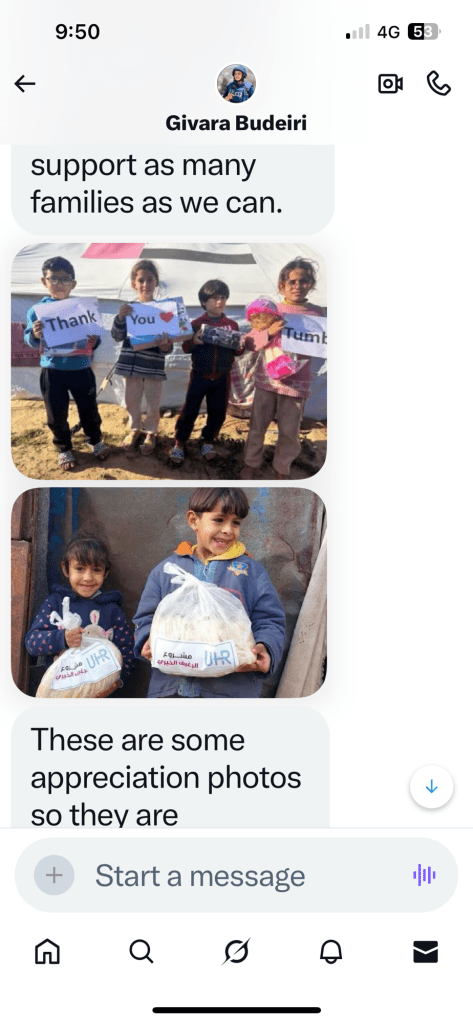
More from Givara Budeiri

These are some appreciation photos so they are guaranteed that the aids do get to the families and children. Your donation will be a gift of hope, a reminder that we are not alone in this struggle, I can provide you with the PayPal or fund raising link if you would love to make a donation, no matter how little it will go a long way.

Thank you so much for standing with us in this very trying time inshalla Palestine will be free. I will never stop fighting with my voice and my platform till a ceasefire, I’m soliciting for support and would appreciate any help at all, it would go a long way helping o displaced families in feeding, providing shelter camps, water, internet, medical aid the list is endless no matter how little it would make a change and put smile on your the faces of so many displaced families as our next aids is being packaged and would be in Rafah border soonest so we are seeking for donations to support as many families as we can.

These are some appreciation photos so they are guaranteed that the aids do get to the families and children. Your donation will be a gift of hope, a reminder that we are not alone in this struggle, I can provide you with the PayPal or fund raising link if you would love to make a donation, no matter how little it will go a long way.

via

John for GEA & 🙈🙊🙉🐒 with Olivetti Group @MIT Keypads

Yet More Fun Stuff frm the 1960’s, You Mentally-frisky Typing People You

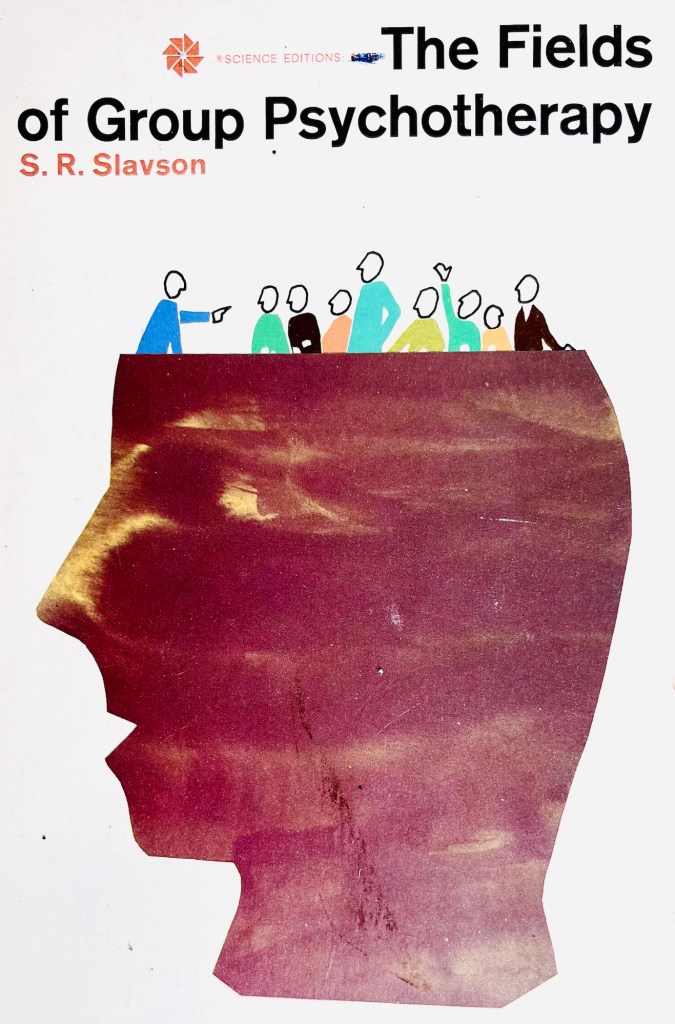
“When men and women are relieved of excessive preoccupation and anxiety involved in obtaining the means of sustenance, they become concerned with measures for maintaining and improving their own physical health and general welfare and those of their chidren. And when it is necessary they can limit their families and/ or space their children to the best advantage for themselves and their offspring. Further, when they are not harassed by the daily care of excessive numbers of children for whom they cannot perforce adequately care physically and emotionally, and are as a result healthy and at ease with themselves and with their children, they seek the knowledge and the skills necessary to assure happiness in their roles as husbands, wives and parents.

“As a first step, their major need is information in areas they themselves recognize as most important for human relationships, namely sex and reproduction, areas about which there is more secrecy, misinformation, superstition and taboo than in any other aspect of contemporary human life. The facts are few and relatively simple to impart to adults. To transmit them to children is much more difficult, however, and the manner in which this is done by parents reflects their own state of development and points up the importance of attitudes as they are associated with and involved in such personal and intimate questions.

“The Margaret Sanger Research Bureau has been organized to render service and education and to conduct research in the fields of contraception and infertility, preparation for marriage and parenthood, and marriage consultation to men and women who seek help in problems of their marital relationships, particularly in the areas of sex and reproduction.

“The nature of problems as seen in the Bureau is fraught with much conscious and unconscious anxiety and guilt because of the extant taboos and superstitions about sex and reproduction. The ease with which the therapist or the counselor deals with these subjects, the directness of the approach and good feeling resulting from sharing with others what is so in problem, are among the factors that contribute greatly to whatever success is achieved.

“A variety of potency disturbances, problems of infertility, and sterility are presented in contraceptive and infertility clinics. The physical examination, diagnoses, and recommendations for treatment of the emotional aspects which patients discover as causing or contributing to physical conditions, help greatly in their accepting psychotherapy.

“At times the sex problems that occur early in marriage are the only ones the men and women are concerned with; but it is also possible to impart knowledge of, and then insight into, their immediate problems to the total emotional relationship, as well as to their own specific conflicts. Increasingly, as men and women seek greater happiness and contentment in their marriage, as all other aspects of their interpersonal relationships are brought to light, these are dealt with in marriage consultation service, and the approach to these problems is psycho-bio-social. It implies that a man is a total person, with a body, intellect and emotions. He has a genetic inheritance and acquired characteristics as a result of having been in a particular sequence and relation in the family [constellation] and in a particular [environment]. One is never isolated or alone; one is always involved in relationships and always in a social [environment] which influences one and which, in turn, one influences.

“The existence of varied capacities of an individual, constitutional in nature, are stressed. This points up an important factor in indications for, and treartment of, emotional disturbances.. Some of our patients are puzzled by the fact that though the same psychopathology with severe mental emotional disorders is present in some patients, it yet allows them to [function] in areas in which well-adjusted persons do not. It brings clearly to focus the uniqueness of the individual, and also that an identical pathology may be quantitatively different. THEY discover that strongert constitutional capacities in a disturbed person may make the difference between adequate and inadequate [functioning].

“Psychotherapy in our Service is used as a method of [treatment] of emotional disturbances as palliative, curative, and preventive. The psychotherapy is psychoanalytically oriented, eclectic in nature, emphasizing both Freudian and non-Freudian concepts, whatever applies in the particular case or group.

“It was found that group treastment offers a more realistic approach to many problems of interpersonal relationships as we see them in our Service than does individual counseling and treatment. Emotional nedds that can be satisfied by a person himself without involving others are relatively few. Most of these are satisfied through or in relation with some other person. Satisfactory [adjustment] to living when it involves another person is dependent upon the manner in which one acts and reacts in a relationship, on how feelings, thoughts and actions are expressed, modified or repressed out of consideration for the other individual involved. In a group one discovers not only why one behaves in a particular manner, but also how this behaviour appears to others, how and why they accept or reject it, and how they think one should modify it.

All our group sessions begin with a 10 to 15 minute discussion by the therapist of the psychodynamic factors in the particular problem under consideration. General mental [hygiene] concepts, social values, and sociological changes as they affect the problem, are also discussed. Beyond this the sessions are [unstructured]

..

“The content of the series of sessions is planned on the dynamic concept that people marry to satisfy certain basic needs such as love, sex and parenthood, and that these needs are influenced by early childhood experiences, by social and cultural [forces] which either reinforce positive attitudes or produce negative ones. The lack of information, the misinformation, the fears and anxieties from the prohibition of ordinary sexual [needs], the difficulties resulting from inadequate child-parent relationships – all adversely affect the capacity to love and prevent the development of a mature personality, culminating in difficulties in marital [adjustment]. It is anticipated that the presentation of the these concepts inculcate more positive attitudes and help to develop ionsight into what young people, as individuals are bringing to their marriage [s] and what the marital relationship involves.

“A series of three sessions is held to deal respectively with love, sex and parenthood. The number has been found adequate to to present the material and to ensure full discussions. Each session usually lasts from three to three and a half hours. Most of the young people are primarily interested in contraceptive advice, but some in more information about sexuality. The approach is to treat sexual [adjustment] in marriage as part of a total emotional relationship.

Students including boring & dangerous old people will note John uses the spelling he learned when he was 17 hey

MORE TIME-WASTER FUN with the Infamous Monkeys

Oh Kevin you crafty little South East Queenslander and N-O-T A HIGH WOODEN HOUSE banks of glass louvre windows WITH AN UNDER-STOREY for putting stuff in i can see you’re up to your old tricks trying to make Mr Gates and Mr Berners-Lee look like rabbits and in fact raising fearsome doubts in the middle class public mind concerning humanity’s late 1980s project in toto

the tennis court was weeded and spread with a reddish-pink hard stuff that was made from crushed anthills

This site can’t be reached

The webpage at https://www.google.com/search?q=the+tennis+court+was+weeded+and+spread+with+a+reddish-pink+hard+stuff+that+was+made+from+crushed+anthills&rlz=1C1WNOO_enAU987AU1001&oq=the+tennis+court+was+weeded+and+spread+with+a+reddish-pink+hard+stuff+that+was+made+from+crushed+anthills&gs_lcrp=EgZjaHJvbWUyBggAEEUYOTIHCAEQIRiPAtIBCDQyNTZqMGo3qAIAsAIA&sourceid=chrome&ie=UTF-8 might be temporarily down or it may have moved permanently to a new web address.

ERR_QUIC_PROTOCOL_ERROR

Kevin you are dashed lucky you weren’t thrown into one of those Forensic Psychiatry Facilities to be found in every state capital run by Geoff Kennett, Ian Hickie and the psychotropic drugs for teens 2008 Australian of th.. oh

John Blundell

Australia

Thematics quantum-relations 2 -5 set series logic

Economy

Human Survival Beyond 2029

Moses Maimonides say 1,300 BCE adherents