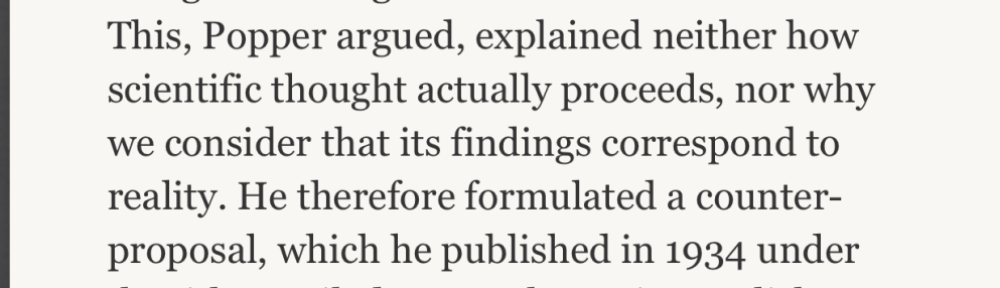
Could it be Post WWII Fact & Value Social Science now become Material Descriptor + Social (affective, transactional or economic) Identifier dialectics or in discursive popular-culture terms Quantum Logic^ after Geoffrey Hinton’s and Harvard University’s MPA + MBA – although the historical sequence was the other way round – you’ll maybe know from what you have learned so far about my independent home-grown out of vicious dispossession & bewildering exile deliberative Object-Event-Fact-Opinion (value/ discussion/ evaluation/ discourse/ popular or social narrative) quantum logic how frankly exciting and contributory simple maths 2 to 5 part interdependent sequentia are for students and researchers – swept up and embraced by mainstream formal natural and social science, in all their notional (Life, Earth et cetera) divisions and branches..
I readily concede that the introductory paragraph is a little haptic, murky and ‘random’ but this document has grown a little Topsy-like over 18 of the most epoch-smashing weeks in the non triumphant history of the human race, now literally destroying its own habitat AND future viability, so there’s overwhelming urgency and extraordinarily useful study material here, so please don’t fool yourself into dismissing, let alone publicly condemning any part of it. It’s a huge and vital public service so out it goes.
Of course I shall review, revise and update its content DAILY. Without our learning in the micro, like the mental constructs of iOS & Microsoft keypads, like ‘ and ’ or ’ and ‘ or ‘ and ‘ or ’ and ‘ in order to, and VITALLY for our own learning and mental health as individual adults, dialectically complement the gargantuan phantasmagorical and “infinitely” expanding toxic waste dump of global media product we know as “the macro” and make robust dialectical sense of the world around and OUR parts in it. Or shall we all go to our beds “tonight” – it’s 24 hour night in #Antarctica hmm – if not dumber then having learned nothing? Forgive me for advancing CCEc again but Centre Circle 1 or ⭕️ 1 is every adult. We do not address horrifically alienating and culturally subversive ancient bucket-filling pedagogy, carrot & stick behaviour therapy or allopathic medicine for anyone on earth, let alone children and adolescents.
The ontological poverty of human languages is such that we with wide eyes and open mouths call a rolling exponentially increasing number of humanly crafted audiovisual & textual display product burning up vast person-power, resource & costly energy as if it were nothing (no thing/ no object/ no FACT) but a bunch of numbers,” but nonetheless Infinite – in whose mental nether world would this be a valid proposition? – They wish & they mean to take us all out with them when they go
This is not a game: this is our grandchildren’s lives. Insanely overcompartmented (helplessly blindly moronically siloed) overcodiified Nineteenth Century CE Euro-American neoclassical Fact & Value and Object & Affect dialectics was a game.
– wanting to add what I imagined to be at this stage of my study the only four valid statements available to discourse and pin a name on, or suggest an identifier or descriptor for, each of the 2,3,4 & five sets in those statements, thus..
SS1 Object – Affect. SS2 Object – Fact – Affect. SS3. Object – Fact – Event -Affect. SS4 (the 5-set/4 conjunctor series or sequence) say Object – Identifying Data/ Fact – Descriptive Data/ Event – Value/ Appraisal
And a final fun note for tonight is that this system of logic has some of its origins in Human Resource Development Carkhuff & Berenson 1975. Secondly although neurolinguistics is my major study in these essays on human explication my work owes nothing to a pop psychology type of publication around 1979 of the same name – except an investigative jumping-off point on left and right eye-movements (now hugely developed and taken up by others since the turn of the century).
The three Romance/ Enlightenment/ Modern Neoclassical Era divisions of the sciences:
- Natural sciences: the study of nature in the broadest sense, including biology, chemistry, physics, astronomy and Earth science.
- Social sciences: the study of people and societies, including psychology, sociology, economics, history.2
- Formal sciences: the study of abstract concepts, including mathematics, logic, theoretical computer science.
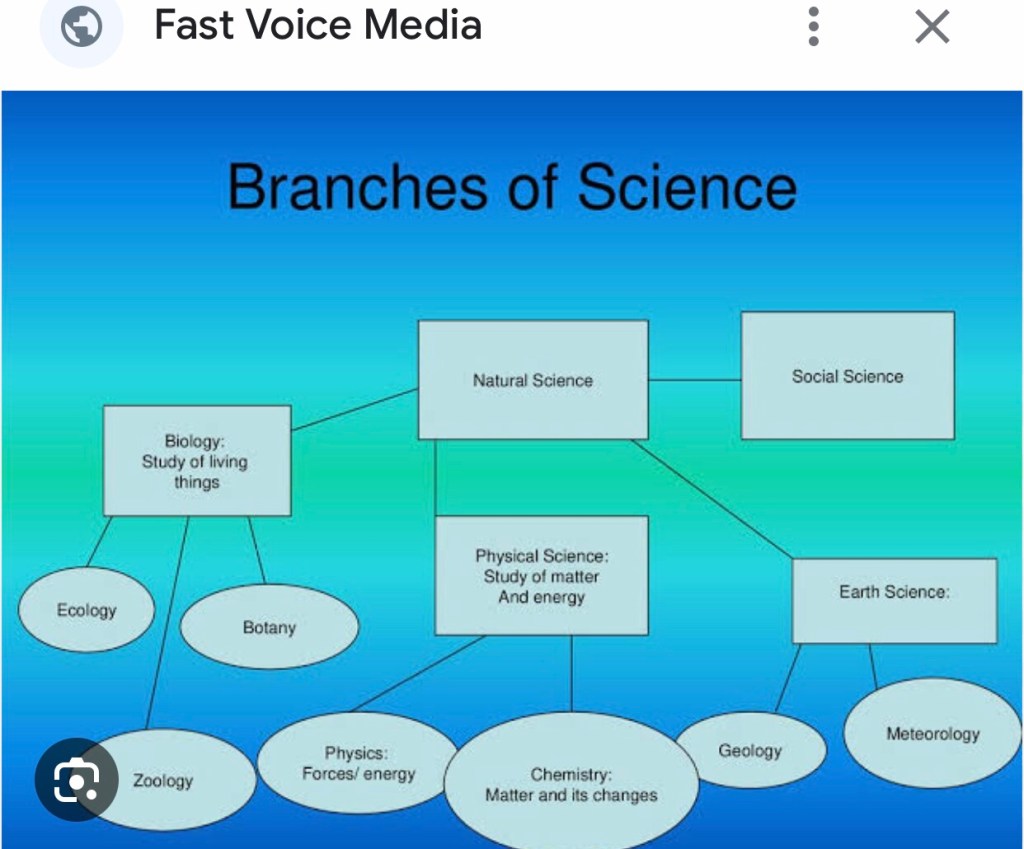
Here’s another merry band of hopefuls, the systems folk. We alas were swamped by functionalist behaviourism and all those politicians who thought politics was the art of whatever one might possibly1 get away with powered by the world famous depressive tit Friedrich Wilhelm Nietzsche’s triumphant Will to Power over other humans, beginning with chicks of course – I mean seriously, where else would you start? These young women make themselves meat for the plucking. Thank goodness Brit Higgins has gone off to Washington to tell the blokes of this world what floppy useless things they are. Thank you Brittany.
So there you go with those bits and pieces of who we indeed are, or thought we were: a human culture that can’t explain itself to itself is not a culture at all but a business model for rich old people to fool with. You knew that.

John
Economics, Health. Neurolinguistics, Philosophy of Science
South Australia
This is a radical critique of globally culturally hegemonic neoclassical scholarship and the religious belief-system that has at the beginning of the 21st century – in the common era marked historically as beginning with the birth or nativity of a Middle-eastern religious seer, worker of “miracles” and prophet with omnipotent “temporal” powers and omniscient metaphysical knowledge – by direct result of its own erroneous ethnocentric misogyne fantastical beliefs about the illustrious mastery of the post 1509 Hernan Cortes (finds Darien, now a popular holiday spot of course), post Italian Renaissance, post 1729 English Industrial Revolution ruling-class Remittance Men in the colonies global playground: the explorers, adventurers, warriors, discoverers and lifters of young women’s dresses (who made copious notes and journal entries about a rather pathetic backward world peopled by indigenous traditional folk who hardly ever got out except to scratch about in their gardens and who plainly needed taking in hand, as for example by Lord Byron with his 12-year old Greek gells, James Cook RN’s crew roving the Pacific or Paul Gaugin managing his Tahitian lovelies..) beliefs it promotes.having become a major, if not the principal, contributor to the destruction of Earth as a fit place for habitation by animals, birds, waterway & wetland fish, pelagic & benthic (oceanic) marine life, microfauna (especially insect pollenising species) an utterly vast panoply of nutritious and medivinal plants every single species and sport belonging to a specific small ecological community – perhaps as tiny as one square-kilometre – whose unique terroir gave definition identity and futures to that particular piece of country in perpetuity, soil fungi & mycorrhizae, microbes, micro-organisms and enzymes vital to immune protection for all life..
Bogus, fake and bad #Science of siloised compartmentalised billionaire-cabal and laundered-money, non-tax-paying funded bogus research and studies conducted in secrecy or effectively under guard of private armies (the proceeds of absent-government ‘gangsterland’ trafficking, terorisation, slavery, quasi-slavery, drugs of psycho-emotional dependency, coercive or brutal sexual trade in human bodies, child violation and killing, femicide, random incarceration, capture by stripping of civil rights and freedom of movement OR associaion or murder of civilians by police, authorities and governments, body-parts for “medical tourism,” regional or international, and last but by no means trivial – in fact the greatest assault ever, we can only imagine, on the pecuniary savings and household security of middle income working people by a multifarious array of expropriation or theft-of-funds modalities, devices and mechanisms) criminality.
They’re always throwin’ goodness at you
But with a little bit of luck
A man can duck!
With a Little Bit of Luck, My Fair Titillation1 as it were,

The Lord above gave man an arm of iron
So he could do his job and never shirk
The Lord gave man an arm of iron-but
With a little bit of luck
With a little bit of luck
Someone else’ll do the blinkin’ work!
With a little bit… with a little bit
With a little bit of luck you’ll never work!
The Lord above made liquor for temptation
To see if man could turn away from sin
The Lord above made liquor for temptation-but
With a little bit of luck
With a little bit of luck
When temptation comes you’ll give right in!
With a little bit… with a little bit
With a little bit of luck you’ll give right in
Oh, you can walk the straight and narrow
But with a little bit of luck
You’ll run amuck!
The gentle sex was made for man to marry
To share his nest and see his food is cooked
The gentle sex was made for man to marry-but
With a little bit of luck
With a little bit of luck
You can have it all and not get hooked
They’re always throwin’ goodness at you
But with a little bit of luck
A man can duck!
The Lord above made man to help is neighbor
No matter where, on land, or sea, or foam
The Lord above made man to help his neighbor-but
With a little bit of luck
With a little bit of luck
When he comes around you won’t be home!
A man was made to help support his children
Which is the right and proper thing to do
A man was made to help support his children – but
With a little bit of luck
With a little bit of luck
They’ll go out and start supporting you
Oh, it’s a crime for man to go philanderin’
And fill his wife’s poor heart with grief and doubt
Oh, it’s a crime for man to go philanderin’-but
With a little bit of luck
With a little bit of luck
You can see the bloodhound don’t find out!
It is precisely the charge that Dostoevsky’s Grand Inquisitor levels against Christ
Inequality and Power: Theory and Practice
Examining the angry junk of Judeo-Arabic & Christian (in French Chretien/ derivative term cretin) belief with RV Sampson 1965 Heinemann..
As noted at the beginning of this long essay the content is all in draft and is distributed before completion as a student – and “world” leaders’ – aid or helpmeet.
Money for nothing and your laughs for free: For example, one of the interpretations for “help meet” proposed by 18-century biblical scholar John Gill was that a woman’s purpose as a “help meet” was to make man “comfortable … to dress his food … be pleasing to his sight, and … be in all respects … entirely answerable to his … wants and wishes.”
John
The argument has so far been conducted in terms of human psychology and individual character. We noticed in purely psychological terms the [propensity] of human beings to enter into relations of dominance and submission with one another. Confident egos expand their field of effectiveness and weak or diffident ones comply with them. The fact of power even at the personal level is, then a very pervasive element in the comon experience of daily life. When we turn from the individual to look outwards at society, the presence of power as an element in our experience immediately looms much larger. Large numbers of individuals acting in concert begin to generate power on a vastly increased scale. Given the age and ubiquity of inequality and power as factors of social experience, the development of an elaborate metaphysic of justification is to be expected. Indeed, it is a truism that that political philosophy has traditionally concerned itself with the serarch for some kind of moral justification for the power and coercion of governments The arguments to justify State power have been many and various. It is frequently defended as a necessary evil, although some arguments, generally associated with the Right in politics, aim to defend power as a good in its own right. However reluctant people may be to defend the use of force or power in purely personal relations, they experience no such reluctance in finding rationalisations to justify its regularised use in the community’s public life. De Maistre [offers] perhaps the most forceful and uncompromising statement of the claims of power:
Ther can be no human socity without government, no government without sovereignty, no sovereignty without infallibility, and this last privilege is so essential that its existence must be assumed even in temporal sovereignty (where it does not reside in fact) as an esential condition for the maintenance of society (Du Pape, 1821, Bk. I, ch. xix).
De Maistre is unusual in the candour with which he makes explicit the assumption of infallibility which is latent within the concept of sovereign power. Power is necessitated because of the incorrigible waywardness of man; but since power is wielded by a few people over many, the logic of justification requires the assumption that the few be less wayward than the many. At the outset we find ourselves therefore committed to the principle of inequality and the proposition that power and virtue go hand in hand. The basic assumptions of authoritarianism would seem to contradict the facts of man’s religious and moral experience. And this relates significantly to the idiom and manner of much of conservative political writing. Conservative writers themselves have been quick to detect the significance of the querelous assertivenes or stridency of much of the writing of their pokitical opponents. It is only fair to mark that theirs too is a characteristic and not fortuitous style. The general tone is one of scepticism well-bred to the point of rather weary worldliness. The accent is one of urbane, secular pessimism, a thinly veiled impatience at the necessity of reminding the public of facts so obvious. Negatively, the style may be expected to betray symptoms of suppressed irritation at the first signs of moral earnestness.. But their deepest distaste is aroused by any form of moral enthusiasm, which will be put down as ‘high-minded,’ ‘priggish,’ ‘canting,’ or ‘holier than thou.’
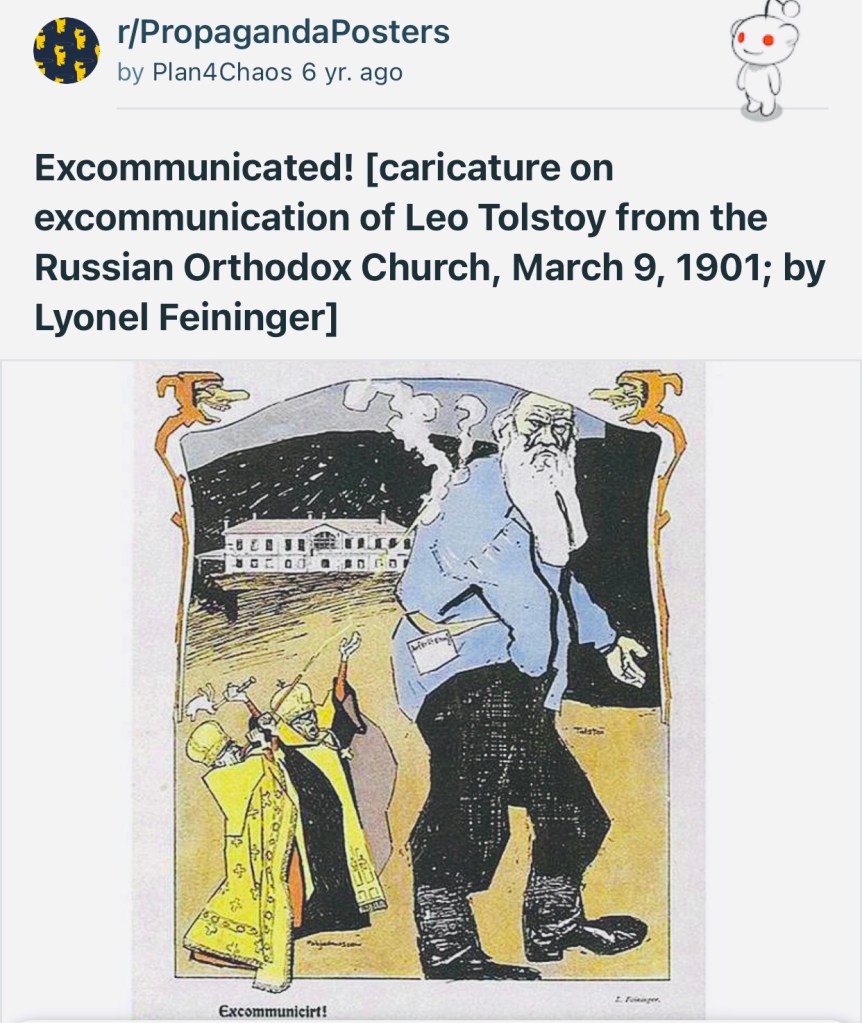
Even a superficial reading of conservative writing will reveal the touchy preoccupation with the phenomenon of ‘moral earnestness’ which would seem to irritate, trouble, or even frighten them. Such people are thought to be dangerous since the established order is thought to depend upon the maintenance of ‘a due sense of proportion.’ The moral aspirant, ‘hotfoot for certainties’ is liable to disturb the peace or the slumber of the quiescent conscience. Shaw’s Inquisitor expressed the feeling well in describing the social function of the Holy Inquisition in the trial of St Joan. ‘A gentle and pious girl, or a young man who has obeyed the command of our Lord by giving all his riches to the poo, and putting on thye garb of poverty, the nlife of austerity, an d the rule of humility and charity, may be the founder of a heresy that will wreck both Curch and Empire if not ruthlessly stamped out in time.’ The Church is right, since it is accommodated to the needs of the great mass of ordinary men, sinners all perhaps, but whose defects and shortcomings the Church understands and charitably tolerates. The point is again vividly illustrated in a German cartoon on the subject of the Synod’s Edict of Excommunication against Tolstoy (It is reproduced from the Bettmann Archive in G Steiner’s Tolstoy or Dostoevsky, 1960, p 255). The cartoon depicts the giant Tolstoy, a rugged heroic figure, struggling under the weight of a cross so immense that it is bursting asunder the roof and portals of the church. Outside the threatened walls stand the outraged [miniature] figures of the clerics of the Orthodox Chhurch, expostulating in impotent fury. The caption reads:’Hinaus mit ihm!.. (Out with him! His cross is much too big for our Church) On the conservative view of the matter, it is Tolstoy who is in error, because he cannot cut himself down to life-size and is accordingly unable to understand normal men whose problems he can neither diagnose nor prescribe for.
It is precisely the charge that Dostoevsky’s Grand Inquisitor levels against Christ in that most influential of modern parables from The Brothers Karamazov. During the Inquisition Christ returns to a Spanish town, is arested by the Inquisitor, and indicted on the three counts of his answers to the question put to him by Satan on the high mountain. The first temptation was that he should prove his divine power by changing the stones into bread. Christ refused on the grounds that he had come to give men the gift of freedom. Obedience so bought would be morally worthless. Man does not live by bread alone, but his appetite must be satisfied before he is asked to consider the claims of virtue. And even so, only a very few will prove capable of seeeking the bread of Heaven. Man craves not freedom but someone to worship. His purpose is far from being the freedom of conscience to choose between good and evil. Most of all he wants peace; he would prefer death to the suffering inherent in the responsibility of moral choice. Anyone who will relieve him of this burden he will readily worship, and once he has found his god, he will tolerate no dissent. He demands community of worship, and will persecute furiously those who threaten his security.
The vain offer of power by miracle is followed by the second temptation, that he should consent to rule by mystery. Again, the Inquisitor does not deny Christ’s wisdom, acknowledging that had he consented to tempt God by casting himself down, his faith would have dissolved,and he would have been hurled against the rocks. But again, he asks, does Christ not know men and their weaknesses? Without miracle and mystery they cannot live. Or is it, he asks ironically, that Christ has come not, as he professes, for all men, but only for the elect who have strength enough to bear the Cross? In the great crises of life, mystery is indispensable to man. If christ denies him mystery a well as miracle, then he will have recourse to mysteries of his own invention, to witchcraft and sorcery. Ultimately it is power to which men respond. Characteristic of their weakness was their demand that Christ should ‘prove’ his credentials by stepping down from the Cross. Again Christ refused to meet such a challenge. The only love that he could accept was a love that was freely given. ‘Thou didst crave for free love and not the base raptures of the slave … But thou ddidst think too highly of men therein, for they are slaves, of course, though rebellious by nature’ (Everyman ed., Vol. I, p 262).
Finally, in the third temptation, Christ banishes Satan altogether by rejecting his last offer, the offer of power and dominiion for their own sake. For there were shown unto him ‘all the kingdoms of the world [in a moment of time‘ .. (in the most common textual reference)], ‘and the glory of them.’ All these things I will give thee, if thou wilt fall down and worship me.’ The acceptance of this gift would in itself have brought man’s willing and absolute worship. The striving for universal unity, in which all men will live in harmony characteristic of an ant-heap, is the third of the abiding urges which dominate men. Even the cconquests of the Timours and the Ghengis-Khans were an unconscious expression of man’s urge to achieve by force the peace of universal unity. By refusing the sword of Caesar, by declining the weapons of authority as welll as those of miracle and mystery, Christ turned away from the last opportunity of bringing the heartts of men under his sway, His alternative, the gift of freedom, can bring men only to disater and ruin.
It is an astringent portrait, not untuched by Dostoevsky’s own self-hatred. Its force lies in the consistency with which it hews close to the view of man’s nature necessary to justify the right of Power to rule, the power in this instance being clothed in the authority of the Church. The balanced and ‘mature’ view of the human situation is that which sees man as inescapably bound to inhabit a universe where pain and suffering, a measure of injustice, of imperfection, of human fallibility, and absurdity are enduring. There is nothing that can be done to alter this basic condition of human life. Inability to do so is a sign of immaturity. Rigorous resistance to evil in all its forms wherever it raises its head, smacks a little of hubris, of arrogance and impiety. Since evil is a necessary part of the great scheme of things, its elimination would threaten the whole mysterios balance of the divine cosmos. Without evil, freedom would be impossible for man; and freedom is his highest vocation. ‘In this light, evil itself becomes a necessary adjunct of human freedom,’ writes Professor Steiner. Professoe Oakeshott says much the same thing when he echoes FH Bradley: ‘We live in the best of all possible worlds, and everything in it is a necessary evil.’
It is not a novel metaphysic and has rarely been better expressed than by the ancient Psalmist. The author of the 73rd Psalm, however, only reached this position after a powerful inward struggle to overcome his initially lively sense of injustice. But then who is to know what internal anguish our contemporary pessimists and realists have had to surmount before manfully resigning themselves to the imperfections of the world? tHe Psalmist’s lamentation is ocasioned by his bewilderment that thye wicked should prospper in the world and the seekers after power inherit the earth.
They are not in trouble as other men; neither are they plagued like other men. Therefore pride compasseth about them as a chain; violence covereth them as a garment. Their eyes stand out with fatness; they have more than heart could wish. They are corrupt, and speak wickedly concerning oppression: they speak loftily.
The ungodly increase in riches, while the Psalmist, conscientiously cleansing his heart, is chastened and plagued for his pains. In his ansguish he tries to convince himself that reality is ‘really’ otherwise. The candour of the original analysis is undermined by self-pity; and the process of self-deception starts. The truth, he acknowledges, is ‘too painful for me.’ Unable to deny the evidence of his eyes, he calls theology to his aid to redress the balance of a world intolerable to his sense of justice. The apparent triumph of the power-seekers is short-lived and illusory, and ultimately God will ensure that they will be humiliated and brought low, ‘Surely thou didst set them in slippery places; thou castedst them down into destruction. How are they brought into desolation, as in a moment! they are utterly consumed with terrors.’ Then quickly recovering himself, he recognises the futility of a wish-fulfilment grounded ultimately in chagrin and envy. ‘So foolish was I, and ignorant.’ Acknowledging his error, he returns to the problem. And his ultimate solution is one of acquiescence in a reality which, however painful must express the the will of Him, who is set over all. In revolt lies madness, since God must be his strength at all times. Difficult it may be to understand a wisdom so full of paradox, but we must rest confident in the ultimate goodness of God. ‘Ihave put my trust in the Lord God, that I might declare all thy works.’ Reconciling ourselves to the inexorable fact that evil has its place in the world, we must learn not to question the mysterious and inscrutable ways of God. However repugnant to our emotions, they will be seen on reflection not to offend our reason. The idiom today, as befits a more secular age, is not always couched in theological terms, but the accent has not changed much. ‘The highest and most easily destroyed of human capacities,’ Professor Oakeshott tells us, is what Keats termed negative capability and defined as as that condition ‘when a man is capable of being in uncertainties, mysterious doubts, without any irritable reaching after fact and reason.’ The nostalgia is unmistakable. It is the longing of the true romantic for an ill-defined, twilight world, a world of intimations, where we are secure in our acceptance of reality, unditurbed by any tetchy, awkward hankering of unsettled and unsettling men.
The emphasis is repeatedly on sstyle and method, on guidance by intimations emanating from unimpaired traditions, on conversation rather than argument, while reliance on general principle is suspect as a symptom of rationalist politics. the intimations are frequently so elusive and phantomlike that it is not easy to come to grips with the content of the argument. For there is an argument; and if the original premises, sometimes made explicit, are examined, they will be seen to derive from a simple metaphysic, the metaphysic of human egoism. Granted that, morally speaking, we ought to be unselfish, the argument runs a condition of survival is that we are at least sufficiently self-regarding to ensure the continued autonomous activity of our own ego. Unselfishness presupposes and rests upon selfishness, which is thus the predicate on which the entire moral argument and the possbility of moral behaviour is raised. Thus it is inevitable and in the nature of things that the hand of every man should always be to some extent turned against the han of every other man.
The urge to dominate is, then, inherent in the necessity of the struggle to survive. But security and survival are specific attainable goals within the reach of the determined man. With sateity might not the urge to dominate wither? Unfortunately not, since in the necessity of the original struggle man ha learnt to acquire a taste for domination. And this continues, after security has been achieved, to find an outlet in the quest for power, prestige, status, wealth.1 Since these are appetites which feed upon themselves and are insatiable, we may safely conclude that the urge to dominate others, to manage men in fact, is natural to man in his present circumstances. Nor does the evidence suggest any flexibility or susceptibility to modification of these fundamental human drives. The notion that by greater understanding we may achieve greater powers of control to redirect is pure myth. Accordingly the first act of realism in politics is to accept without repining these inexorable facts. True, there are other sides to our complex nature; the urge to dominate does not exhaust our attributes. But the other qualities are more precariously based; and wisdom in politics consists of building upon that which is most dependable rather than that which is possibly most elevating to the soul. Successful adjustment to the restricting circumstance of any human society will require a thorough understanding and acceptance of the supremacy of the law1 of human egoism. In Oakeshott’s words, ‘The enterprise of these politics will be to make use of the strongest, and not merely the highest, human impulses in a continuous attempt to correct ascertainable mischiefs and to suppress actual malpractices in society…”
Policy, to be viable and practical, mustnbe based on a capacity to observe accurately men as they are. If we do this, we will see that they are most readily stirred to exert themselves on behalf of themselves, their kith and kin, and their friends.
Thus is the moral argument stood on its head, and tailored to everyday use. The idiom is contemporary, but the argument has an ancestral lineage.. When men act justly, either they have not been put in the way of temptation, or they do so under compulsion out of fear of the consequencves of acting otherwise, never willingly
page 147 bottom
John Blundell neurolinguistics human & ecological health philosophy of science
South Australia
^ LF Crisp, Australia.. Even in the second half of the 19th century as the six Australian colonies were still acquiring internal self government and a significant measure of political democracy they sought ‘despite their lack of international status’ to influence such aspects of foreign relations as, for example, immigration policy with the avowed intention of preserving the racial homogeneity of the population mix. By the beginning of the 20th century this posed particular difficulties in their relationship with Great Britain, a problem which intensified when the British entered into the Anglo-Japanese Alliance in 1902 and obviously wished to restrain potential racial slurs inherent in the so-called ‘White Australia policy’.
2Social science is the study of people: as individuals, communities and societies; their behaviours and interactions with each other and with their built, technological and natural environments. Social science seeks to understand the evolving human systems across our increasingly complex world and how our planet can be more sustainably managed. It’s vital to our shared future.
1 It is vital readers seeking adaptive change in the behaviour of Australian parliamentarians understand the powerful trope from the 1960s, produced in the name of political science and seized upon by ambitious men and women, on both sides of the law, “Politics is the art of the possible”
2 masculinist lore, bullying, coercive relations with women, male-chauvinist police-culture, suborning & genital mutilation of girls, and right along the continuum towards random ‘rape-culture,’ bodily mutilation and femicide of course
The ontological poverty of human languages is such that we with wide eyes and open mouths call a rolling exponentially increasing number of humanly crafted audiovisual & textual display product burning up vast person-power, resource & costly energy “inas if it were nothing (no thing/ no object/ no FACT) but a bunch of numbersfinite,” indeed as if it were nothing“nothing a bunch bunchbunch weremerely by a bunch of numbers a a bunch of numbers
3 .Sheldon’s mother .. Leonard here thinks you might be pining for a young lady. And you’ve got cats with Jewish names
as if it were nothing (no thing/ no object/ no FACT) but a bunch of numbers

